Friday, April 13, 2007


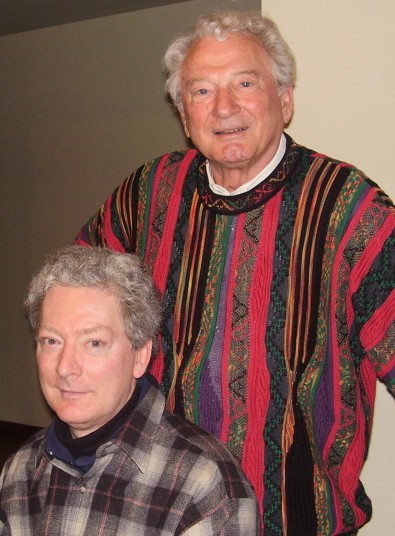
Opera Workshop portrait--right side
Posted by Picasa
The cast:
Dido: Sarah Benzinger
Aeneas: Conor Jamison
Belinda: Mindy Willens
2nd Woman: Laura Greenfield
Sorceress: Sara Young
1st Witch: Kirsten Randrup
2nd Witch: Emily Skold
Spirit: Jamie Banister
1st Sailor: Jon Walton
Dancer: Mika Smith
Chorus of Courtiers and Sailors: Ian Ford-Terry, Samuel Hyde, Mika Smith, Jose Gonzalez, Jon Walton, Dennis Freeman, DennisAstley, Larry Sebring, Christopher Hatcher, Justin Vanegas, Lisa McNeely, Anjoli Taratusky, Jean Belef-Hoggard, Jamie Banister, Danielle Van deWetering, Katherine Kinley,Laura Greenfield, Mira Bareis, Erin Wessel.

Stage Director, Artistic Director: Elisabeth Harrington
Conductor: Ken Ayoob
Assistant Director, Backstage Manager: Margaret Noe
Rehearsal Accompanist, Additional Musical Preparation: John Chernoff
Lighting Design: Bob Dooney
Choreography: Mika Smith; Lisa McNeely

Saturday, April 07, 2007

Posted by Picasa
Humboldt Bay Brass Band

Humboldt Bay Brass in concert, featuring Renaissance and Baroque ensembles on period instruments, and classic American, English and Irish full band music, on Saturday April 7 at 8 PM in the Fulkerson Recital Hall on the HSU campus in Arcata. Tickets $6 general, $2 student/seniors, free to HSU students with ID, from HSU Ticket Office (826-3928) or at the door. Produced by HSU Department of Music, Gil Cline conducting.

Chris Cox of the Humboldt Bay Brass Band
Posted by Picasa
The Original Stereo with Humboldt Bay Brass

The Humboldt Bay Brass Band spring concert begins big—and gets bigger.

”This concert will begin with a short fanfare played by Baroque Trumpets von Humboldt,” said Gil Cline, HSU Music professor and director of the event. “These are the eight-foot natural trumpets—that is, they don’t have valves. They’re from the age of Bach. We also have a pair of rare hand-made Baroque timpani on loan from the Jefferson Baroque Orchestra of Ashland, Oregon.”

That fanfare introduces the first half of the concert, which features the sounds of Venetian Brass ofthe late Renaissance and early Baroque. “This is always popular with audiences,” Cline says. “The brass group is split into two choirs, placed a distance apart. The result is the original left/right stereo effect, as the two choirs play—sometimes together, sometimes in echo of each other.”

Added to the brass are pipe organ and contrabass, “just as in the time of Giovanni Gabrieli and San Marco Cathedral in Venice.” The music includes the beautiful “Let Nothing Ever Grieve Thee” by Brahms, and ends with the rollicking “Emperor's Fanfare” by Padre Antonio Soler. On this work two of the trumpeters switch to small, and rarely heard, piccolo trumpets.

The second half of the concert is all brass band by the full Humboldt Bay ensemble. Once again, it starts with a fanfare: “Towermusic” by Jean Francois Michel is in the old tradition of playing brass music from civic towers. Following is “Southdown March,” made famous by the brass bands of the international Salvation Army.

The band plays on: “The Conquerors,” a work suggesting heroes and adventures of olde England by Eric Ball, “An Irish Interlude” and the popular “Procession of the Nobles,” by Nicoli Rimsky-Korsakov, with an arrangement by band member Mike Shepherd, of Brookings, Oregon. Closing the concertis “Finlandia” by Jean Sibelius.

Following well-received concerts over the past four years, the recording of a full-length audio CD last year, and shared concerts with bands from Eureka, Scotia, and McKinleyville, the Humboldt Bay Band’s Spring concert balances the full band with smaller ensembles. The Humboldt Bay Band itself is perhaps the only group of its type north of the Bay Area. Members include HSU students and local community musicians, plus musicians from as far away as Ferndale and southern Oregon-- and for the present concert, an exchange student from Norway.

The concert begins at 8 PM on Saturday, April 7 in the Fulkerson Recital Hall on the HSU campus in Arcata. Tickets $6 general, $2 student/seniors, free to HSU students with ID, from HSU Ticket Office (826-3928) or at the door. Produced by HSU Department of Music, Gil Cline conducting.

Media: Arcata Eye.
The musicians of the Humboldt Bay Brass Band are…

Cornets: Chris Cox, Mike Shepherd, Frederick Belanger, Emily Justis, Tristan Kadish,William Zoller, Michael deWeese, Jessica Loop, and Joyce Carter.
Flugelhorn: Gary Ross.
E-flat Tenors: Leon Hamilton, Anwyn Halliday, and Spencer Hitzeroth.
Baritones: Matt Morgan and Dick LaForge.
Euphoniums: George Ritscher and Siri Kvalied.
Trombones: Doug Hendricks, Phil Sams, and Toshi Noguchi.
E-flat Tubas: Joe Eckert and Gregg Moore.
Double B-flat Tubas: Fred Tempas and Jerry Carter.
Percussion: Grace Kerr, Johnny Major,and Albert Hall.

Additional musician in the Venetian Brass and Baroque Trumpets von Humboldt are Perry Crook and Brian Schwarzberg, trumpets. Greg Granoff, organ. Ruby Diaz, contrabass.

Saturday, March 31, 2007

Posted by Picasa
Nicholas Lambson

Nicholas Lambson plays classical guitar, including selections from his forthcoming CD, in a Faculty Artists Series concert on Saturday March 31 at 8 PM in the Fulkerson Recital Hall on the HSU campus in Arcata. $8 general, $3 students and seniors. Tickets from the HSU Box Office (826-3928) or at the door.
Posted by Picasa
Nicholas Lambson Reconnects in First HSU Concert

In his first local concert, classical guitarist and HSU Music faculty newcomer Nicholas Lambson is reconnecting, especially to people who influenced him, even when he didn’t realize it.

“I wanted to pay homage to the teachers and influences in my musical development,” Lambson said. He will pay tribute to the first classical guitarist he saw play: the late Terry Graves, at the University of Redlands. But he will also play a composition by a man he never knew: his father.

Lambson’s parents divorced when he was two years old, and he didn’t see his father after he was about seven. “I knew he had something to do with music,” but Lambson had already himself begun playing classical guitar when he discovered that his father composed for the instrument and was himself a guitarist. “When I found out he was a guitar player it freaked me out,” Lambson recalls.

He reconnected with his father in 2000. “I called him out of the blue, and drove to Utah to see him. I hung out with him for a weekend, and we got acquainted, and have been in touch ever since.”

His father is composer Stanley Anthony Funicelli. “When I was there, and discovered what his career was all about, I wanted to see what he had written. So he gave me basically everything he’d written for the guitar, and I’ve been sifting through it ever since. There were a few pieces I immediately gravitated to, and I’m playing one of them in the program here. I may record it next year.” Funicelli has also begun composing pieces especially for his son.

In addition to the Funicelli piece, Etude No. 1, “Stormsong” in E, Lambson will play selections by Benjamin Britten, Dusan Bogdanovic, Fernando Sor, Moreno Torroba, Leo Brouwer, Manuel Maria Ponce, Phillip Houghton and Manuel DeFalla.

In addition to teaching in the HSU Music department and Music Academy, Nicholas Lambson performs throughout California. His first solo guitar album will be released later this year.

He recently completed his Masters at the San Francisco Conservatory of Music under David Tanenbaum and Dusan Bogdanovic. He graduated with honors with a Bachelor degree in Guitar Performance and Recording Arts from Cal State San Bernardino.

Nicholas Lambson’s local debut is a Faculty Artist Series concert on Saturday, March 31 at 8 PM in the Fulkerson Recital Hall on the HSU campus in Arcata. $8 general, $3 students and seniors. Tickets from the HSU Box Office (826-3928) or at the door.

Media: Eureka Reporter "Spotlight."
Posted by Picasa
The Program

Six Airs, Op.19 from the Magic Flute (1824) by Fernando Sor

Nocturno in A minor (1926) by Moreno Torroba (1891 – 1982)

Nocturnal, Op.70 after John Dowland (1963)by Benjamin Britten (1913-1976)

Prelude 6 in A Major (1929) by Manuel Maria Ponce (1882 - 1948)

Mysterious Habitats (1994) by Dusan Bogdanovic (b.1955)

Paisaje Cubano con Campanas (1986) by Leo Brouwer (b.1939)
Homenaje (1920) by Manuel DeFalla (1876 - 1946)

Etude No. 1, “Stormsong” in E (1988) by Stan Funicelli (b.1948)

Stele (1989) by Phillip Houghton (b.1954)
Posted by Picasa
Notes on Composers

Fernando Sor (1778-1839)

One of the guitar’s greatest composers and performers, Fernando Sor was born Josesph Fernando Macari Sors in Barcelona, Spain in 1778. He received his first musical education in singing, harmony and counterpoint at the monastery Escolania at Montserrat. As a child, Sor had played his father’s guitar, and in the monastery he studied organ, violin and also singing.

At the age of 19, Sor presented his first opera in the Barcelona Theater. When the French invaded Spain, Sor came into contact with many French musicians in Madrid. In 1813, when the French left Spain after defeat, Sor left also and made his new home in Paris. After spending several years in London and Russia, Sor eventually returned to Paris where he died in 1839. Sor left a catalogue of over 400 pieces for the guitar including a method, studies, fantasies, themes with variations, and sonatas. Sor was also one of the few guitar-composers who was well-known in his lifetime for his non-guitar compositions including ballets, orchestral works, songs, piano works, and more. His ballet Cendrillon was performed with great success at the Kings Theatre in 1822, in Paris the following year, and then in Moscow.

In 1819, the first London performance of Mozart’s opera The Magic Flute had created a sensation. Sor was in London at the time and seems to have been caught up in the enthusiasm. He composed his celebrated Op.9 Variations on “Oh caro armonia” around 1820-21 and performed them with some success. It is likely that Six Airs choisis de l’Opéra de Mozart: Il Flauto Magico, Op.19 were part of the phenomenon. The themes, not the best known in the opera, are Marche réligieuse, Fuggite o voi beltáfallace, Giú fan ritorno I Geny amici, O dolce armonia, Se potesse un suono, and the chorus Grand’ Isi, grand’ Osiri.


Moreno Torroba (1891 – 1982)

Among the many aspirations Andrés Segovia had for himself and the guitar was to create a modern repertoire in association with notable orchestral and instrumental composers. The first such composer to contribute to what is now referred to as the “Segovian repertoire” was a young Moreno Torroba. The Nocturno was one of the first pieces Torroba wrote for Segovia, featuring evanescent figurations in its outer sections and a somber central episode; it is deeply expressive. Almost all of his nearly one hundred works for guitar are short dance-like numbers, but there are also more ambitious works including his concertos. Torroba’s use of the Spanish musical language is often more in the spirit of fiesta than the fiery passion of flamenco or the soulful melancholy of the cante hondo (the “deep song” of the Gypsies).


Benjamin Britten (1913-1976)

The tenor, Peter Pears (1910-1986) was Britten’s loved companion, professionally and personally, for much of his mature life. Pears frequently collaborated with the illustrious Julian Bream on lute. This collaboration complimented Britten’s fondness for Elizabethan song, and Bream’s incessant pleas for a guitar work were eventually satisfied in this vein. Several other works by Britten can be traced to institutional and personal commissions and spontaneous expressions of friendship for other musicians. Julian Bream had to wait “a good ten years” for Nocturnal but the music came! The work was premiered at the Aldeburgh Festival in 1963.

The Nocturnal is a cornerstone of the 20th century repertoire and yet Britten originally wanted to write a piece for lute. Thus, it is a series of seven variations and a passacaglia on the song Come, heavy sleep by John Dowland, a setting of which appears at the end of the cycle. It can be viewed as a reverse theme and variation form, and is not unlike his Lachrymae, Op.48 for viola and piano, also based on a Dowland song. In the Nocturnal, originally called Night Fancy, Britten is concerned with depicting the various psychological moods and qualities of sleep, a fascination that he held throughout much of his life. A strong parallel is suggested between sleep and death here and is immediately recognizable in the original Dowland song upon which the Nocturnal is based.

Each variation has a descriptive title, and the Passacaglia can be seen as the main element of the piece, building impetus with an obsessive reiteration of the bass theme, itself derived from an interior voice heard at the beginning of Dowland’s song. This is a seminal work for the guitar in many respects: in its dimensions and formal design, high intellectual content, in its notational, textural and formal innovations, and above all, its dramatic and expressive power.
Posted by Picasa
Notes on Composers Continued

Manuel Maria Ponce (1882 – 1948)

Ponce was a leading exponent of musical nationalism in Mexico, and it would not be unreasonable to proclaim him Mexico’s greatest composer.

Ponce labored several years on the set of Twenty-Four Preludes, completing them in 1929. Due to global economic depression, only the first twelve found their way into publication in 1930. Nearly half of a century later, the Mexican guitarist Miguel Alcázar found most of the remaining pieces among the composer’s manuscripts. The set appear to have included one piece in each major and minor key. Unable to find a prelude (No. 3) in G among Ponce’s manuscripts, Alcazar substituted a piece of variations on a theme by Cabezón. The prelude on this program (No. 6) is an inventive and lyrical piece evocative of Spain.


Leo Brouwer (b.1939)

The composer, guitarist and conductor Leo Brouwer Mezquida was born in Havana, Cuba in 1939 into a family of musicians. Brouwer went on to specialize in composition, studying at the Julliard School. It is possible to divide Brouwer’s compositional career into three periods. The first started in 1954 with a series of pieces that explored the resources of the guitar in works that combined traditional classical forms with Cuban nationalistic inspiration. In the 1960’s, after the Cuban revolution, he became familiar with the work of avant-garde composers such as Penderecki and Bussotti while attending the Warsaw Autumn Festival in 1961. Brouwer was the first Cuban composer to make use of various modern techniques including elements of post-serialism, aleatory, and open forms.

The late 1970’s brought a third period described by Brouwer as hyper-romanticism, a return to Afro-Cuban roots coupled with traditional technique and minimalism. Paisaje Cubano con Campanas is a fascinating piece from his third period and is in four parts. Brouwer uses repeated fragments, harmonics and some special effects, such as simultaneous tapping of the fingerboard with both the left and right hands, to create a unique atmosphere.


Manuel de Falla (1876 – 1946)

Manuel de Falla was a true Andalusian who was born in Cadiz and settled in Granada in 1919. While many of his pieces have been arranged for guitar, Homenaje is his only original guitar work.

After the death of Claude Debussy in 1918, Falla was asked to write an article for the memorial issue of Revue musical. He did so and added a piece of music, the Homenaje, which simultaneously satisfied guitarist Miguel Llobet’s earlier request for a work. Falla had no detailed knowledge of the workings of the guitar but he borrowed one and, after only two weeks, he produced this work. While brief, this habanera, as guitarist Julian Bream has said, gives the feeling of being much longer than it is, such is the spell it casts. Near the end, Falla inserts a quotation from Debussy’s Soirée dans Grenade, a memory of his evening meeting with its composer in that city. Homenaje is a landmark of 20th century guitar repertoire not only due to its musical integrity, but also due to the fact that nearly every note in the score has a particular articulation or effect placed upon it.

Stan Funicelli

At present Funicelli’s catalogue numbers over 500 original works, including 6 Symphonies, 7 Sonatas for Unaccompanied violin, 5 Sonatas and 7 Sonatinas, 14 String quartets as well as numerous other works for solo guitar.

During a trip to Salt Lake City, Utah, I had a chance to catch up with my father in 2000 for the first time in over a decade. During this trip, as a young guitarist, I discovered the vast musical career he had achieved. Prior to this meeting, the subject and scope of his musical endeavors were somewhat unclear to me. I discovered that his native instrument was the guitar, and that he had composed a wealth of great music for it. I have played a number of his works, all indelibly stamped with his artistic voice and technical knowledge of the instrument. This particular Etude has obvious merit for a concert setting. While exploring arpeggio technique and exploiting the textural resources of the instrument, it also programmatically invokes the imagery of a storm in terms of color and power.

Dusan Bogdanovic (born 1955)

Born in Yugoslavia, he completed his studies of composition and orchestration at the Geneva Conservatory with P. Wissmer and A. Ginastera, and in guitar performance with M.L.São Marcos. Early in his career, he received the only First Prize at the Geneva Competition and gave a highly acclaimed debut recital in Carnegie Hall in 1977. He has taught at the Geneva Conservatory and the University of Southern California and is presently engaged by the San Francisco Conservatory.

A richly gifted composer, improviser and guitarist, Dusan Bogdanovic has explored musical languages that are reflected in his style today- a unique synthesis of classical, jazz and ethnic music. . He has over fifty published compositions ranging from guitar and piano solo works to chamber and orchestral ensembles, as well as close to twenty recordings ranging from Bach Trio Sonatas to contemporary works. His theoretical work for guitar, at Berben Editions, includes Polyrhythmic and Polymetric Studies, as well as a bilingual publication covering three- voice counterpoint and Renaissance improvisation with a structural analysis of motivic metamorphoses in composition and improvisation.


Phillip Houghton (b.1954)

Originally trained as an artist, Houghton began music studies at the age of 20. As a guitarist Phillip toured extensively and was recorded by the ABC before deciding in 1980 to leave performance and concentrate on composition.

As a composer Phillip is self taught and his compositions reflect the influence of many styles: classical, jazz, rock, ambient and world music. His early influences include the music of Jimi Hendrix, The Beatles, Led Zeppelin, King Crimson, Gryphon, Gong, Miles Davis, Satie, Debussy, Ravel, Riley, Crumb and Eno, while his work continues to reflect a strong interest in art, mythology and the environment.

At the 1990 Adelaide Festival, John Williams premiered Houghton's work for guitar solo 'Stele'. This performance was recorded and televised by ABC Tv. This piece appears on the John Williams CD 'The Guitarist'. Stele is inspired by the Grecian landscape and Greek mythology and in particular by various forms of classical sculpture.

Saturday, March 24, 2007


Robert Elfline
Posted by Picasa
Robert Elfline

Solo piano from Bach to the avant-garde performed by Robert Elfline in an HSU Faculty Artist Series concert on Saturday March 24 at 8 PM in the Fulkerson Recital Hall on the HSU campus in Arcata. $8 general, $3 students and seniors. Tickets from the HSU Box Office (826-3928) or at the door.
Posted by Picasa
Time Curves on—and in—the piano with Robert Elfline in concert

“The Time Curve Preludes” is one of the unusual piano pieces HSU Music instructor Robert Elfline will play in concert at Fulkerson Hall, but it turns out to be only one of the ways time curves during this program.

The evening begins with pieces by familiar names—a prelude from The Well-Tempered Clavier by Johann Sebastian Bach, early pieces by Johannes Brahms and a Beethoven sonata.

But after intermission, Elfline does not immediately return to the keyboard. Instead he goes “under the hood,” inside the piano to manipulate strings directly to perform two works by modern American composers.

These “Two Pieces for String Piano” are by American composer Henry Cowell. “He experimented with what’s called ‘extended technique,’” Elfline explained, which can produce very different musical effects. “The Banshee,” the first Elfline will play, “has this really eerie ghostlike quality.” For “Aeolean Harp,” “I silently depress keys on the keyboard but strum the strings on the inside of the piano. It creates a harp-like sound.”

Famed composer Virgil Thompson praised Henry Cowell’s work by noting that “No other composer of our time has produced a body of works so radical and so normal.”

Then back to the keyboard for The Time Curve Preludes by contemporary American composer William Duckworth. “These are neat little pieces based on a Fibonacci sequence,” Elfline said. Math literates as well as fans of The Da Vinci Code will know that in a Fibonacci sequence, each number is the sum of the two preceding numbers. “In these pieces, the structures gradually compress or gradually expand, creating this funny sensation that time is bending.” The Time Curve Preludes is considered the first “post-minimalist” work. They typically combine the minimalist procedures of addition and subtraction with influences from world music.

Then time curves back again as Elfline returns to the keyboard to perform an early twentieth century sonata by Czech composer Leos Janacek. It tells the story of a worker who was killed during a political demonstration supporting a Czech university.

“All of the pieces have a sense of going on a journey,” Elfline said of his concert program. “They all have a narrative quality. The first Brahms piece is from a narrative poem. The Beethoven sonata is thought by many to represent the journey of his recent long illness and then his recovery. There’s even a narrative quality in the shorter journeys in the pieces by Cowell and Duckworth. And then the last piece deals with the ultimate journey we all must take.”

Though the program appears to be chronological, there are some time curves within it. “It starts with Bach in about 1750, then to Brahms in about 1870, but then back to Beethoven in the 1820s. The second half begins in 1905, then 1977, then back to 1905 in a very different style.”

The Robert Elfline concert begins at 8 PM on Saturday March 24 is in Fulkerson Recital Hall on the HSU campus in Arcata. Tickets from the HSU Box Office (826-3928) or at the door are $8 general, $3 students/seniors. This is a Faculty Artist Series concert, with proceeds to help fund scholarships for HSU music students.
Posted by Picasa
The Program

From The Well-Tempered Clavier, vol. II by Johann Sebastian Bach:
Prelude and Fugue in E-Flat Major, BWV 876.

From Four Ballades, op. 10 by Johannes Brahms
I. Andante (After the Scottish Ballad “Edward”)
II. Andante – Allegro ma non troppo – Molto Staccato e leggiero

Sonata no. 31 in A-Flat Major, op. 110 by Ludwig van Beethoven

INTERMISSION

Two Pieces for String Piano by Henry Cowell:
The Banshee
Aeolean Harp

From The Time Curve Preludes by William Duckworth:
I.
IV.
VII.
VIII.
X.
XI.
XVII.
XIX.
XXIV.

Sonata (“1.X.1905”) by Leos Janacek
I. The Presentiment
II. The Death

Saturday, March 03, 2007


Josh Nelson rehearses his woodwind quintet for the Composers Concert.
Posted by Picasa
Composers Concert

“Rites of Passage,” chamber works composed by HSU alumnus Dante De Silva and graduating HSU student composers will be presented on Saturday, March 3 at 8 PM in the Fulkerson Recital Hall on the HSU campus in Arcata. $6 general, $2 students and seniors, free to HSU students with ID. Tickets from the HSU Box Office (826-3928) or at the door. An HSU Dept. of Music performance, directed by Brian Post.

For computer generated electronic works like those of Composer
Concert composer Dante De Silva, this is what the "instrument"
looks like.
Posted by Picasa
Creativity Abounds with HSU student composers’” Rites of Passage”

The Composers Concert is a showcase each semester for original music written by students studying composition in the HSU Music Department, as well as by faculty and alumni. But this one is a little different.

“It’s called ‘Rites of Passage’ because for five of the six students, it will be their last group recital here,” said HSU Music professor J. Brian Post. “They’re graduating this spring, and after this concert they’ll have only individual recitals. For me as their composition instructor, this event is very exciting. I’ve worked with each of these students for two years now, and it’s great to see their development and how they’ve found their voices as composers.”

Among the new works being played at Fulkerson Recital Hall on March 3 is a saxophone duet by student Jeannette Kyle. “Her plan of departure for this piece was to use both jazz and classical styles,” Post said. “At first the two styles are separate within the piece, but eventually they meld together.”

Graduating senior Josh Nelson will premiere a woodwind quintet called “The Nixie of the Mill Pond,” which will be conducted by Paul Cummings of the HSU Music Department faculty “It’s a multi-movement piece based on one of the Grimm fairy tales that Josh read to his daughter,” Post said.

Other students whose work will be performed are Youn Joo Sim, Danny Brown, Jon Walton and Mark Jensen.

The featured composer for the recital is HSU alumnus Dante De Silva, who is currently completing his doctorate in composition at UCLA. Two arias composed by Brian Post will also be performed.

That these new works are being presented together for the first and last time makes this a special experience for the audience. “Most of the pieces are chamber works, including string quartets, but there will also be some electronic music,” Post said. “There’s an eclectic blend of compositional styles and instrumentation that adds to this unique event. ”

Saturday, February 24, 2007


HSU Jazz Orchestra with Dan Aldag
Posted by Picasa
Symphonic Band and Jazz Orchestra

The HSU Symphonic Band performs works of four American composers, and the HSU Jazz Orchestra plays tunes by Benny Carter, Charles Mingus, Eureka High and HSU grad Jared Coyle, and HSU student Youn Joo Sim in a joint concert at 8 PM on Saturday, February 24 in the Fulkerson Recital Hall on the HSU campus. $6 general, $2 students and seniors, HSU students free with ID. Tickets from HSU Box Office (826-3928) or at the door.

HSU Symphonic Band
Posted by Picasa
Coming Home with the HSU Jazz Orchestra and Symphonic Band

The HSU Jazz Orchestra will feature compositions by a homegrown talent and a current HSU student in a joint concert with the HSU Symphonic Band on Saturday, February 24 in the Fulkerson Recital Hall.

The Jazz Orchestra will debut the big band arrangement of “Alone in the Fishbowl” by Eureka High School and HSU graduate Jared Coyle. “He wrote this for a band he played in while he was an HSU student, called Mr. Lunch,” Jazz Orchestra director and HSU music teacher Dan Aldag said. Coyle now lives outside Portland, Oregon.

The orchestra will also reprise "Song For Yong Zoo" by HSU senior, Youn Joo Sim. “The Jazz Orchestra plays all of the students’ final projects from the Jazz Arranging class,” Aldag explains, “and two years ago, when we read Youn Joo’s song, it immediately jumped out at everybody as an exceptional piece. We played it the next semester, and we’re reviving it now.” The Orchestra will play it one more time, for Youn Joo’s Senior Recital this spring.

Also back by popular demand—and with another HSU connection—the Jazz Orchestra will play a Charles Mingus tune (“E’s Flat, Ahs Flat Too”) arranged by Tommy Obeso, a long-time member of the orchestra who is student teaching this semester.

The evening gets started with music by four American composers played by the HSU Symphonic Band, directed by HSU Assistant Professor of Music Paul Cummings. “American Salute” by Pulitzer Prize winner Morton Gould is a “classic band and orchestra piece,” Cummings said, based on the American Civil War tune, “When Johnny Comes Marching Home.”

“Third Suite” by contemporary American composer Robert E. Jager features rapid meter changes, and “is fun to play,” Cummings said. On the other hand, “Final Testament” by Fisher Tull is “ a very dramatic and expressive piece. He has a very distinct harmonic style. You can tell a Fisher Tull piece within the first thirty seconds.” “Final Testament” will be conducted by Kenneth Ayoob, HSU Music Department chair and conductor of the Humboldt Symphony.

The Symphonic Band’s final piece is “Scenes From the Louvre” by another Pulitzer-Prize winning American composer, Norman Dello Joio. It was originally written for a TV series about the famous Parisian art museum, and each movement suggests a different section of the Louvre.

Then the Jazz Orchestra takes the stage, with renditions of “Jackson County Jubilee” by jazz great Benny Carter, and “The Jody Grind” by Horace Silver, as arranged by John Clayton, before playing the Jared Coyle and Youn Joo Sim tunes, and the Tommy Obeso arrangement.

This joint concert gets underway at 8 PM on Saturday, February 24 in the Fulkerson Recital Hall on the HSU campus. $6 general, $2 students and seniors, HSU students free with ID. Tickets from HSU Box Office (826-3928) or at the door.

Media: Eureka Times-Standard, Eureka Reporter.

Symphonic Band rehearses with Paul Cummings
Posted by Picasa
Additional notes: Dan Aldag

"Jackson County Jubilee" was written by Benny Carter for a 1960 Count Basie album entitled "Kansas City Suite."

"The Jody Grind" is a funky Horace Silver tune from the '50s in a new arrangement by John Clayton that he wrote for his band in LA, the Clayton-Hamilton Jazz Orchestra.

Additional Notes: Paul Cummings

“Morton Gould wrote “American Salute” in the 1950s as a piece for orchestra, and he later transcribed it for band. One of its main features is that the bassoon plays the “Johnny Comes Marching Home Again” tune—not many band pieces feature bassoons. We have three this year, so it’s a good time to feature them.”

“Third Suite” by Robert Jager: “The meter keeps changing, from a measure of 3 to 2 back to 3, then 4, for example, not only from movement to movement, but within each one. It’s a challenge for the players, but it’s also fun to play.”

“Final Testament” by Fisher Tull: “His very distinct harmonic style is characterized mainly by modal harmonies. He writes very creatively for percussion.”

“Scenes From the Louvre” by Dello Joio: “ There are five movements to this piece—we’re doing three of them for this concert. We may do the entire five movements next time, in our April concert.”

Saturday, February 17, 2007

Posted by Picasa
Elisabeth Harrington

A Valentine to Nature, Poetry and Passion: “Flowers, Fantasies and Lovesick Fools," a program of 20th century American art songs sung by soprano Elisabeth Harrington, accompanied by pianist John Chernoff, will be presented on Saturday, February 17 at 8 PM in the Fulkerson Recital Hall on the HSU campus in Arcata. $8 general, $3 students from HSU Box Office (826-3928) or at the door. An HSU Department of Music Faculty Artist Series concert.
Posted by Picasa
“Flowers, Fantasies and Lovesick Fools,” a Valentine to Poetry and Passion in the American Art Song

On Saturday, February 17—Valentine’s Day Weekend--soprano Elisabeth Harrington will perform “Flowers, Fantasies and Lovesick Fools,” a program of art songs by 20th century American composers. “These songs are intimate and personal, filled with images of nature and metaphysical yearnings, as well as themes of life and death, and love--- and more love,” Harrington explains. “It’s the softer side of 20th century American music.”

Art songs are poems set to music, “so that in the end the whole is greater than the sum of the parts.” The texts include poems by A.E. Housman, Emily Dickinson, Elizabeth Barrettt Browning, e.e. cummings and the Bengali poet, Tagore. Some selections are fanciful (like John Duke’s “Shelling Peas’), and some are funny (Carrie Jacobs Bond’s “Half-Minute Songs”). Harrington concludes the program with what she calls “Poetic Pairs:” songs by two different composers who use the same poem, such as Elizabeth Barrett Browning’s “How Do I Love Thee?” with music by a male composer born in 1913, and a female composer born in 1956.

Elisabeth Harrington became an Assistant Professor of Voice at HSU last semester, so “Flowers, Fantasies and Lovesick Fools” is her Humboldt debut. For her first recital, “ I wanted to do songs in English, so everyone would understand the poetry,” she said, “and I wanted to do art songs, because they get overlooked so often. We hear tons of opera or musical theatre, but the art song is a much smaller genre.”

Elisabeth Harrington and John Chernoff.
Posted by Picasa
Because the art song is typically performed by one singer with one instrumental accompanist, pianist John Chernoff was important in Harrington’s plans. “Having someone as intuitive and immediate as John makes him a great partner for performing this kind of repertoire, because he’s absolutely in tune with every nuance the poetry demands,” Harrington said. “It’s a very delicate interplay between singer and accompanist, so I was happy to learn John was available.”

As for the recital being scheduled during Valentine’s Day week, Harrington confessed it’s a coincidence, but believes it’s appropriate. “If you think of love as being a relationship of you and the world, or you and your spiritual self as well as relationships between people, then this program has a Valentine mood. And of course there are traditional love songs, since love is one of our strongest emotions, and the one that inspires poetry and song. It’s also universal—so come on out, all ye lovesick fools!”
Posted by Picasa
The Program

To poems by the Bengali poet, Tagore: “When I bring to you colour’d toys,” “The Sleep That Flits” --John Alden Carpenter (1876-1951)

“Carpenter is known for his orchestral works,” Harrington said. “These have a metaphysical quality, and also a fairy tale feeling.”

In a Myrtle Shade.” by Charles Griffes (1884-1920)
“A composer of Carpenter’s generation, and like him he absorbed compositional elements of French melody composers. They wrote very gentle harmonies.”

Six songs by John Duke (1899-1984)
Loveliest of Trees
I can’t be talkin’ of Love
Shelling Peas
Little Elegy
I Ride The Great Black Horses
I carry your heart

“These six songs are set to poems by six different poets. ‘Shelling Peas’ is a fantasy, and a lot of fun for audiences. ‘I Ride the Great Black Horses’ is quite a ride—it’s a frantic, rhythmic tour de force for both pianist and singer. From the opening piano figure, we’re running at breakneck speed, and you know it’s going to be a journey of heartbreak somehow…‘I carry your heart’ is a poem by e.e. cummings, just an outpouring of love.”


“Half-Minute Songs” by Carrie Jacobs Bond (1862-1946.)
Making the Best of It
First Ask Yourself
To Understand
Doan’ Yo’ Lis’n
How to Find Success
The Pleasure of Giving
Answer the First Rap
A Good Exercise
A Present From Yourself
Now and Then
When They Say the Unkind Things
Keep Awake

“ Each one lasts maybe 20 seconds, and they’re each a little platitude about how to go through life—sort of a Miss Manners of composition. I’ve done these songs before and I just adore them.”

--Intermission—

Sven Lekberg (1899-1984)
The Road to Avrillé, I drank at Every Vine, The Spring and The Fall

“Lekberg was primarily a choral composer who wasn’t known for his solo art song settings, so they’re not done very often, but they’re interesting. They’re very chromatic and romantic. In these three songs, the first and third are very big, very operatic, with lots of dynamic contrast. But between them is a song that’s absolutely minimalist compared to the two that surround it.”

Poetic Pairs:

The Daisies, by Samuel Barber (1910-1981)
The Daisies by Seymour Barab (b. 1921)

How Do I love Thee? Norman Dello Joio(b. 1913)

How Do I Love Thee? Sonnets from the Portuguese, no. 6 by Libby Larsen (b. 1950)


Out of the Morning by Vincent Persichetti (1915-1987)
Will There Really Be a Morning? By Ricky Ian Gordon (b. 1956)


“The last part of the program is what I’m calling ‘Poetic Pairs’—the same text set by two composers. ‘The Daisies’ is set by Samuel Barber and also by Seymour Barab [perhaps best known for his childrens’ operas.] Elizabeth Barrett Browning’s “How Do I Love Thee” is interpreted by Norman Dello Joio and a very contemporary female composer, Libby Larsen. ‘Will There Really Be a Morning?” is a contemplative poem by Emily Dickinson, as set by Vincent Persichetti [perhaps best known as a music educator, one of whose students was composer Philip Glass] and also by Ricky Gordon, who is one of the contemporary composers bridging the gap between classical music and musical theatre.”


Elisabeth Harrington

Soprano Elisabeth Harrington is Assistant Professor of Voice at HSU this year. She teaches voice classes and directs the Opera Workshop.

She earned her DMA in Voice Performance and Pedagogy from the University of Colorado (Boulder), and taught voice at the University of North Carolina, Chapel Hill. She completed the M.M. in Voice Performance at the University of North Carolina in Greensboro, her native city.

In addition to her opera and classical music performances (including two seasons with the Aspen Music Festival Opera Theater), she has appeared in musical theatre, and sang and played flute in a blues and bluegrass band.

Saturday, February 10, 2007


Virginia Ryder
Posted by Picasa
Virginia Ryder

Classical Sax: Virginia Ryder performs an evening of classical saxophone music, accompanied by John Chernoff on piano, in an HSU Faculty Artist Series concert on Saturday, February 10 at 8 PM in Fulkerson Recital Hall on the HSU campus in Arcata. Tickets are $8 general, $3 students, from the HSU Ticket Office (826-3928) or at the door.
Rare Pleasures of Classical Sax in Faculty Artist Series Concert at HSU

Say “saxophone” and you might think of jazz artists like John Coltrane and Branford Marsalis, or pop stars like Kenny G., or maybe the Stax sax soul sound, the Big Band sax section of Glenn Miller, or the raunchy sax of 1950s rock & roll. But these are not what Adolphe Sax had in mind when he invented the instrument in 1840.

“He meant it to be a classical instrument,” said Virginia Ryder of the HSU Department of Music. “He thought it would be integrated in orchestras.”

That didn’t happen very much, but with the finesse of woodwinds and the power of brass, the relatively new instrument called the saxophone still found favor with classical music composers.

One of the first was Russian composer Alexander Glazounov (1865-1939) whose “Concerto” will be performed by Virginia Ryder on saxophone and John Chernoff on piano, as part of their upcoming evening of classical saxophone music at HSU’s Fulkerson Recital Hall.

“John requested this one,” Ryder said, “but it’s also been one of my favorites. This is the first time I’ve had the opportunity to perform it since I was a student.”

The duo will also perform “Picnic on the Marne” by contemporary American composer Ned Rorem. “He’s known mostly for his songs, and this set of seven pieces are essentially songs without words,” Ryder said. The theme is a couple of friends on a road trip from Paris to the country and back, with interactions described by “stage directions” in the score, including “fast and blatant,” “dangerously slow, muffled in blue, followed by a tense discussion” during which the saxophone is directed to play “hot and free,” and the piano is to be “cold and strict.” “It’s a lot of fun to play,” Ryder added.

Contemporary French composer Claude Bolling is probably best known for his “Suite for Flute and Jazz Piano Trio” with Jean-Pierre Rampal. Like that work, his “Le Papillon” (The Butterfly) for saxophone and piano “goes back and forth from a classical to a jazz feel,” as Ryder describes it. “It plays around with time elements—it’s also a lot of fun.”

What Ryder describes as the “dark cloud” or serious moment in this generally “ light-hearted program” is “Elegie et Rondeau” by Czech-born, naturalized American contemporary composer Karel Husa, whose “String Quartet #3” won the Pulitzer Prize in 1969. “This is a very powerful piece, with a lot of the same emotions of his most-played work, “Music for Prague 1968.”

The program ends with “Tiamat,” composed by a former HSU student and current member of the HSU Music faculty, Dante DeSilva. “It’s a work for unaccompanied saxophone that uses ‘extended techniques’ that go beyond the usual saxophone techniques to include multiphonics, which is sounding more than one tone at a time,” Ryder said.

Virginia Ryder has performed extensively on saxophone and oboe through the U.S. in orchestras including the Boston Symphony, Denver Symphony and Pittsburgh Symphony. She is a current member of the Eureka Symphony, Symphony of the Redwoods in Mendocino County and the Mendocino Music Festival Orchestra. She’s also performed with Manhattan Transfer, George Burns and Bill Cosby. She teaches studio oboe, bassoon, saxophone, class woodwinds and chamber music at HSU.

Saturday, February 03, 2007


Eric Cabalo
Posted by Picasa
Guest Artist: Eric Cabalo

Guitarist and director of classical guitar studies at Sonoma State University Eric Cabalo will perform a program of South American solo guitar music on Saturday, February 3 at 8PM in the Fulkerson Recital Hall on the HSU campus in Arcata. $8 general, $3 students/seniors. Tickets from HSU Box Office (826-3928) or at the door. A free Guitar Master Class with Cabalo will be offered on Sunday at 11 AM. This guest artist appearance is produced by the HSU Department of Music.
Eric Cabalo Performs Latin Guitar Classics

“We don’t get many professional classical guitarists coming through here, “said Nick Lambson, who teaches guitar at Humboldt State. “That’s one reason this recital by Eric Cabalo is a special event.”

Eric Cabalo will perform a program of South American solo guitar music on Saturday, February 3 at 8PM in the Fulkerson Recital Hall on the HSU campus in Arcata.

Cabalo performs primarily in the Bay Area, as a soloist, chamber musician, and as half of the Cabalo/Green Duo, with guitarist Stuart Green. He has recently released his first CD, titled Evocacíon.

Cabalo is director of classical guitar studies at Sonoma State University, and is the founder/director of 12th Fret Guitar Studios, a guitar program providing classical guitar instruction for children and adults.

At HSU, Cabalo will perform a program of South American solo guitar classics, including compositions by Jose Luis Merlin, Jorge Cardosa, “3 Venezuelan Waltzes” by Antonio Lauro, and five preludes by Heitor Villa-Lobos.

Admission for the February 3 concert is $8 general, $3 students/seniors. Tickets are available from the HSU Box Office (826-3928) or at the door. This guest artist appearance is produced by the HSU Department of Music.

Cabalo will also teach a Master Class on Sunday at 11 AM. Call HSU Music Department at 826-3531 for more information.

Eric Cabalo’s web page is http://www.ericcabalo.com.

Eric Cabalo
Posted by Picasa
Program
Eric Cabalo, guitar
Saturday, February, 3rd 2007


Suite del Recuerdo …………………..Jose Luis Merlin (b.1952)

Evocacion
Zamba
Chacacera
Carnavalito
Evocacion
Joropo

Milonga …. Jorge Cardosa (b.1949)

3 Venezuelan Waltzes…….Antonio Lauro (1917-1986)
Andreina
Natalia
Yacumbu

Choro No. 1……………….…Heitor Villa-Lobos (1887-1959)


INTERMISSION


Verano Porteno …………….Astor Piazzolla
(1921-1992)

Prelude #1 in Em……………Heitor Villa-Lobos (1887-1959)

Prelude #2 in E Prelude #3 in Am
Prelude #4 in Em
Prelude #5 in D

Dansa Brasiliera ……………………..Jorge Morel (b.1931)

Saturday, January 27, 2007


James Marchand. Posted by Picasa
Guest Artist Series: Mozart's Birthday

Guest artist James Marchand will perform two Mozart piano sonatas, and scholar Robert Spaethling will read from his new translation of Mozart’s letters, to celebrate Mozart’s 251st birthday on Saturday, January 27 at 8 PM in the Fulkerson Recital Hall on the HSU campus in Arcata. $8 general, $3 students/seniors. Tickets: : 826-3928.
Sonatas and Letters on Mozart’s Birthday at HSU

Sure, people make a fuss on your 250th birthday, but where is everybody on your 251st? Well, the HSU Department of Music will be throwing a party for Wolfgang Amadeus Mozart on his 251st birthday, January 27, featuring pianist James Marchand performing two Mozart piano sonatas, and literary scholar Robert Spaethling, reading from Mozart’s letters.

This Faculty Guest Artist series event begins at 8 PM on Saturday, January 27 in the Fulkerson Recital Hall on the HSU campus in Arcata.

James Marchand performs in the Bay Area. An HSU graduate, he returns to campus after 30 years. He will play Mozart’s Piano Sonata in A major, K. 331 and the Piano Sonata in C minor, K. 457.

A professor emeritus of German at the University of Massachusetts, Robert Spaethling will read his from his new translations of Mozart’s letters in his book, Mozart’s Letters, Mozart’s Life.

Admission is $8 general, $3 students and seniors. Tickets are available from the HSU Ticket Office: 826-3928.

James Marchand (seated) and Robert Spaethlng. Posted by Picasa
The Program


Introduction of James Marchand by Robert Spaethling

Introductory Remarks to Mozart’s Piano Sonata in A major by Robert Spaethling

James Marchand performs Mozart’s Piano Sonata in A major, K. 331

Robert Spaethling talks about Mozart as a correspondent and reads excerpts from his letters.

Intermission

Introductory Remarks to Mozart’s Piano Sonata in C minor by Robert Spaethling

James Marchand performas Mozart’s Piano Sonata in C minor, K. 457 .


James Marchand teaches piano in Novato, CA and gives public performances in the Bay Area.

Robert Spaethling taught German language, literature, and culture at Harvard University, Williams College, UCSD, and UMass/Boston, where he also served as Dean of Graduate School, Vice Chancellor for Academic Affairs, and Provost of the University. He is now Professor Emeritus and lives with his wife Ellen in Larkspur, CA.