Archive 2006-2016 pre-production information, Humboldt State University Department of Music Events in Arcata, California. HSU Ticket Office: 707 826-3928. Music Department: 707 826-3531.
Showing posts with label Beethoven. Show all posts
Saturday, October 13, 2012
Cindy Moyer and Daniela Mineva Play Beethoven and Debussy
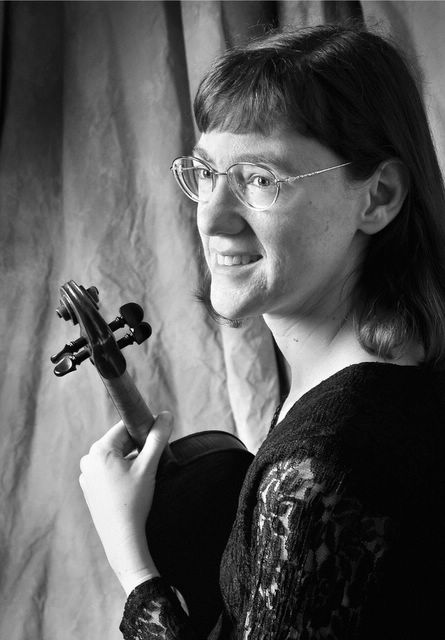
Violinist Cindy Moyer begins her project of playing all 10 Beethoven violin sonatas in an HSU Music Faculty Artist Series concert with pianist Daniela Mineva on Saturday, October 13 in Fulkerson Recital Hall.
She starts with the first one—the Sonata in D Major for Piano and Violin, which Beethoven wrote when he was 29. “While it’s an early piece, it is clearly recognizable as mature Beethoven,” Moyer said. “The first movement is stormy and dramatic, while the last movement is lilting.” She plans to play the other nine violin sonatas over the course of several future recitals.
Also on the program are the Sonata for Violin and Piano by Claude Debussy. “This is the 150th anniversary of Debussy’s birth, so playing his only violin sonata seems appropriate,” Moyer said. “It combines Debussy’s typical dreamy, ethereal style with some more direct and energetic sections."
Witold Lutoslawski was a leading 20th century composer and, with Chopin, one of the greatest Polish composers ever, Moyer notes. Written late in his career in 1984, the Partita for Violin and Piano combines traditional and experimental elements, assuring a unique performance each time. “While the harmonies are definitely modern, I hope listeners will find the piece exciting, dramatic and interesting to listen to.”
Moyer and Mineva also combine on From My Homeland by 19th century Czech composer Bedrich Smetana. Based on folk melodies, "this piece features sweeping, lyrical melodies contrasted with fast and flashy sections," Moyer said.
Moyer plays one solo selection: Fantasia No. 7 by George Philipp Telemann. “He wrote this at about the same time as Bach composed his famous solo violin pieces. But this is on a much more intimate scale, and is much easier to understand on a first hearing.”
The Faculty Artists Series concert with Cindy Moyer and Daniela Mineva is Saturday, October 13 at 8 p.m. in the Fulkerson Recital Hall on the HSU campus in Arcata. Tickets: $8/$3 from HSU Box Office (826-3928) or at the door. Produced by HSU Music Department.
Media: Humboldt State Now , Tri-City Quarterly
Labels:
Beethoven,
Cindy Moyer,
Daniela Mineva,
Faculty Artist Series
Friday, December 09, 2011
The Humboldt Symphony performs popular pieces by Gershwin and Beethoven and other works on Friday evening and Sunday afternoon, December 9 and 11.
George Gershwin’s symphonic tone poem An American in Paris is his most famous work, after “Rhapsody in Blue.” “You hear the sounds of the Paris streets of the 1920s, even the taxi horns,” said Humboldt Symphony conductor Paul Cummings. “It has elements of jazz, blues and ragtime—popular styles heard in a cabaret but in a symphonic setting. Gershwin was gifted at making this music work for orchestra—and in this piece especially, he did it with his orchestration as well as his composition.”
The Humboldt Symphony performs the version called “An American in Paris Suite” as arranged by John Whitney, which is basically selected from the original.
Gershwin himself described it as “a light, jolly piece, a series of impressions musically expressed...It’s not a Beethoven symphony, you know.”
Beethoven’s Egmont Overture is not a symphony either, but in compact form it exemplifies the majestic power of his music. “It’s a great example of Beethoven’s mastery of musical form and structure,” said Cummings. “There’s a logical flow to this music that had a major impact on 19th century composers.”
This overture was composed for a play by Goethe, dramatizing the heroic sacrifice of the 16th century Flemish Count of Egmont, who took a stand against oppression and paid for it with his life. Beethoven’s overture was so effective in expressing this theme that it became the unofficial anthem of the 1956 rebellion against Soviet control in Hungary.
“Beethoven uses the entire orchestra to great effect,” Cummings said. “The writing in this overture features the instruments at their best. Woodwinds are especially called upon to be expressive. It’s a very exciting piece.”
The Symphony program also includes the first and second movements of Alexander Borodin’s Polovtsian Dances, which all the dances from Act II of the play Dance of the Polovtsian Maidens. “There are a variety of moods in this music, depending on the character each dance depicts,” Cummings said.
The Brook Green Suite by Gustav Holst is entirely a string orchestra piece. “All the instruments have independent voice,” Cummings observed, “and there’s some wonderful counterpoint.” Known as Holst’s most accessible work, the Brook Green Suite was the last of his music that Holst heard performed.
Humboldt Symphony performs on Friday December 9 at 8 p.m. and Sunday December 11 at 3 p.m. in the Fulkerson Recital Hall on the HSU campus in Arcata. Tickets are $7 general, $3 students/seniors, from the HSU Ticket Office (826-3928) or at the door. Free to HSU students with ID. Directed by Paul Cummings, produced by HSU Music Department.
Media: Humboldt State Now, Arcata Eye, North Coast Journal, Humboldt Beacon.
Labels:
Beethoven,
Gershwin,
Humboldt Symphony,
Paul Cummings
Saturday, April 09, 2011
Embraceable Fang Zhang at HSU
Pianist Fang Zhang brings an international reputation and a unique program that includes European classics, American popular music and a Chinese piano work to HSU’s Fulkerson Recital Hall on Saturday, April 9.
“We are delighted to host the Chinese pianist, Fang Zhang,” said HSU Music professor Daniela Mineva. “His superb musicality and mature artistry are combined with impeccable technique.”
Born in Shenyang, China, Mr. Zhang began piano lessons at the age of four and won his first piano competition at the age of seven. With graduate degrees from the Eastman School of Music and appointed to the faculty of the Peoples University of China, he has performed widely on three continents. He was awarded the 2006 Rachmaninoff Society Special Prize at the Viardo International Piano Competition, among other honors. In 2008 he co-founded the Beijing Chamber Ensemble, and will tour U.S. universities with this group through 2012.
At HSU he will play Beethoven’s Rondo in C Major and “Funérailles,”the seventh of ten compositions in the Poetic and Religious Harmonies cycle by Franz Liszt, followed by "Sheng dan jing mo chou,”a piano work inspired by traditional Beijing Opera.
He ends the first half of his concert with two George Gershwin songs, as transcribed for piano by Pittsburgh-born Earl Wild: “Embraceable You” and "I Got Rhythm,” both from the musical Girl Crazy.
After the intermission, Mr. Zhang plays the Piano Sonata in B Minor by Franz Lizst, which Daniela Mineva describes as “very demanding.” It is considered Lizst’s greatest work for solo piano.
In addition to his concert on Saturday, Mr. Zhang will conduct a Master Class on Friday, April 8 from noon until 1:30 PM in the Fulkerson Recital Hall. It is free and open to the public.
Pianist Fang Zhang performs on Saturday April 9 at 8 pm in the Fulkerson Recital Hall on the HSU campus in Arcata. Tickets: $8/$3 students and seniors from HSU Ticket Office (826-3928) or at the door. A Guest Artist concert produced by HSU Department of Music.
Media: Humboldt State Now, Tri-City Weekly, Arcata Eye
Pianist Fang Zhang: The Program
Rondo in c major Op.51 No.1: L.V. Beethoven
Funérailles from Harmonies poétiques et religieuses: F. Liszt
Sheng, Dan, Jing , Mo, Chou : A Mao Wang
Two Etudes: Embraceable You, I got Rhythm: G.Gershwin-E.Wild
Intermission
Sonata in b minor: F. Liszt
Artist's Commentary
Sheng dan jing mo chou” is a piano work inspired by Role Types in Chinese traditional opera -Beijing Opera.
Beijing opera followed the traditions of classical Chinese operas, and was developed on the basis of Kunqu opera and many other local operas. Accordingly, the characters on its stage were divided into sheng, dan, jing and chou, the four major role types, according to their sexes, personalities, ages, occupations and social status (In the early phase of Beijing opera, there used to be sheng, dan, jing, mo and chou five major categories. Later, sheng and mo merged into one.). Different role types had their specific features in singing and other aspects of performance.
Sheng
The Sheng (生) is the main male role in Beijing opera. This role has numerous subtypes. The laosheng is a dignified older role. These characters have a gentle and cultivated disposition and wear sensible costumes. One type of laosheng role is the hongsheng, a red-faced older male. The only two hongsheng roles are Guan Gong, the Chinese God of War, and Zhao Kuang-yin, the first Song Dynasty emperor. Young male characters are known as xiaosheng. These characters sing in a high, shrill voice with occasional breaks to represent the voice changing period of adolescence. Depending on the character's rank in society, the costume of the xiaosheng may be either elaborate or simple. Off-stage, xiaosheng actors are often involved with beautiful women by virtue of the handsome and young image they project.The wusheng is a martial character for roles involving combat. They are highly trained in acrobatics, and have a natural voice when singing.Troupes will always have a laosheng actor. A xiaosheng actor may also be added to play roles fitting to his age. In addition to these main Sheng, the troupe will also have a secondary laosheng.
Dan
The Dan (旦) refers to any female role in Beijing opera. Dan roles were originally divided into five subtypes. Old women were played by laodan, martial women were wudan, young female warriors were daomadan, virtuous and elite women were qingyi, and vivacious and unmarried women were huadan. One of Mei Lanfang's most important contributions to Beijing opera was in pioneering a sixth type of role, the huashan. This role type combines the status of the qingyi with the sensuality of the huadan.A troupe will have a young Dan to play main roles, as well as an older Dan for secondary parts.Four examples of famous Dans are Mei Lanfang, Cheng Yanqiu, Shang Xiaoyun, and Xun Huisheng.[52] In the early years of Beijing opera, all Dan roles were played by men. Wei Changsheng, a male Dan performer in the Qing court, developed the cai ciao, or "false foot" technique, to simulate the bound feet of women and the characteristic gait that resulted from the practice. The ban on female performers also led to a controversial form of brothel, known as the xianggong tangzi, in which men paid to have sex with young boys dressed as females. Ironically, the performing skills taught to the youths employed in these brothels led many of them to become professional Dan later in life.
Jing
The Jing (净) is a painted face male role. Depending on the repertoire of the particular troupe, he will play either primary or secondary roles.This type of role will entail a forceful character, so a Jing must have a strong voice and be able to exaggerate gestures.[55] Beijing opera boasts 15 basic facial patterns, but there are over 1000 specific variations. Each design is unique to a specific character. The patterns and coloring are thought to be derived from traditional Chinese color symbolism and divination on the lines of a person's face, which is said to reveal personality. Easily recognizable examples of coloring include red, which denotes uprightness and loyalty, white, which represents evil or crafty characters, and black, which is given to characters of soundness and integrity.Three main types of Jing roles are often seen. These include tongchui, roles that heavily involve singing, jiazi, roles with less emphasis on singing and more on physical performance, and wujing, martial and acrobatic roles.
Chou
The Chou (丑) is a male clown role. The Chou usually plays secondary roles in a troupe.[57] Indeed, most studies of Beijing opera classify the Chou as a minor role. The name of the role is a homophone of the Mandarin Chinese word chou, meaning "ugly". This reflects the traditional belief that the clown's combination of ugliness and laughter could drive away evil spirits. Chou roles can be divided into Wen Chou, civilian roles such as merchants and jailers, and Wu Chou, minor military roles. The Wu Chou is one of the most demanding in Beijing opera, because of its combination of comic acting, acrobatics, and a strong voice. Chou characters are generally amusing and likable, if a bit foolish. Their costumes range from simple for characters of lower status to elaborate, perhaps overly so, for high status characters. Chou characters wear special face paint, called xiaohualian, that differs from that of Jing characters. The defining characteristic of this type of face paint is a small patch of white chalk around the nose. This can represent either a mean and secretive nature or a quick wit.
Beneath the whimsical persona of the Chou, a serious connection to the form of Beijing opera exists. The Chou is the character most connected to the guban, the drums and clapper commonly used for musically accompaniment during performances. The Chou actor often uses the guban in solo performance, especially when performing Shu Ban, light-hearted verses spoken for comedic effect. The clown is also connected to the small gong and cymbals, percussion instruments that symbolize the lower classes and the raucous atmosphere inspired by the role. Although Chou characters do not sing frequently, their arias feature large amounts of improvisation. This is considered a license of the role, and the orchestra will accompany the Chou actor even as he bursts into an unscripted folk song. However, due to the standardization of Beijing opera and political pressure from government authorities, Chou improvisation has lessened in recent years. The Chou has a vocal timbre that is distinct from other characters, as the character will often speak in the common Beijing dialect, as opposed to the more formal dialects of other characters.
Artist Bio
Fang Zhang enjoys an incredible career both as pianist and performer spread over three continents. He is prize winner and finalist of Viardo International Piano Competition where he was awarded with Rachmaninoff Society Special Prize, and Missouri Southern International Piano Competition. Mr. Zhang is widely recognized for his technical demands of the repertoire and artistic imagination. He completed graduate degrees at the Eastman School of Music (MM), where he also received the Eastman Performer's Certificate, the School's highest award for distinction in performance and Central Conservatory of Music, Beijing (BM).
Frequent guest as an orchestral soloist, Mr. Zhang has performed at some of the most prestige venues in China and United States. As an active chamber musician, he was awarded the First Prize as the collaborative pianist in the 2007 Jesse Kniesel Lieder Competition. In 2008, he co-founded and jointed as pianist the Beijing Chamber Ensemble. The group is invited for season 2011-2012 to perform and give master classes at some of the most prestige educational institutions in USA like Eastman School of Music, University of Michigan at Ann Arbor, and University of Colorado at Boulder.
In 2010 concert season, Mr.Zhang performance with Xiamen Orchestra Symphony and Shenzhen Orchestra Symphony resulted in CD release “Live Concert under the Beijing EAV Publishing Center.
Born in Shenyang, China, Mr. Zhang began piano lessons at the age of four and won his first piano competition at age of seven. He studied with Thomas Schumacher, Guo Zhihong, Fang Zhang (no relation), Yafen Zhu, Qifang Li and Lu Pan. Currently, Mr. Zhang is on the faculty at the Beijing Renmin University of China, School of Arts where he maintains studio of 18 students.
Friday, April 24, 2009
John Brecher
Cellist and HSU faculty emeritus John Brecher plays Beethoven and the Shostakovich Cello Sonata on Friday, April 24 at 8 pm in Fulkerson Recital Hall on the HSU campus. Tickets are $8 general, $3 students/seniors from the HSU Box Office (826-3928) or at the door. An HSU Department of Music Guest Artist concert.
Saturday, March 24, 2007
The Program
From The Well-Tempered Clavier, vol. II by Johann Sebastian Bach:
Prelude and Fugue in E-Flat Major, BWV 876.
From Four Ballades, op. 10 by Johannes Brahms
I. Andante (After the Scottish Ballad “Edward”)
II. Andante – Allegro ma non troppo – Molto Staccato e leggiero
Sonata no. 31 in A-Flat Major, op. 110 by Ludwig van Beethoven
INTERMISSION
Two Pieces for String Piano by Henry Cowell:
The Banshee
Aeolean Harp
From The Time Curve Preludes by William Duckworth:
I.
IV.
VII.
VIII.
X.
XI.
XVII.
XIX.
XXIV.
Sonata (“1.X.1905”) by Leos Janacek
I. The Presentiment
II. The Death
From The Well-Tempered Clavier, vol. II by Johann Sebastian Bach:
Prelude and Fugue in E-Flat Major, BWV 876.
From Four Ballades, op. 10 by Johannes Brahms
I. Andante (After the Scottish Ballad “Edward”)
II. Andante – Allegro ma non troppo – Molto Staccato e leggiero
Sonata no. 31 in A-Flat Major, op. 110 by Ludwig van Beethoven
INTERMISSION
Two Pieces for String Piano by Henry Cowell:
The Banshee
Aeolean Harp
From The Time Curve Preludes by William Duckworth:
I.
IV.
VII.
VIII.
X.
XI.
XVII.
XIX.
XXIV.
Sonata (“1.X.1905”) by Leos Janacek
I. The Presentiment
II. The Death
Labels:
Bach,
Beethoven,
Brahms,
Faculty Artist Series
Saturday, November 11, 2006
Cindy Moyer
The Killer B’s: Violinist Cindy Moyer performs a program of Bach, Beethoven, Brahms and Benjamin Britten, with Yumi Watanabe on piano and Greg Granoff on harpsichord, on Saturday, November 11 at 8 PM, in the Fulkerson Recital Hall on the HSU campus in Arcata. $8 general, $3 students/seniors, from HSU ticket office (826-3928) or at the door. An HSU Music Dept. Faculty Artist Series concert: 826-3531.
Cindy Moyer Brings the “Killer B’s” to HSU
B there or B square? “The theme for this concert is ‘B’ composers,” said Cindy Moyer, violinist and HSU Professor of Music. “We have music of the classic triumvirate of great masters: Bach, Beethoven and Brahms, plus the 20th century English composer, Benjamin Britten.”
Moyer will perform in the HSU Department of Music Faculty Artist series on Saturday, November 11 at 8 PM in the Fulkerson Recital Hall on the HSU campus in Arcata. Also appearing will be Yumi Watanabe on piano and Greg Granoff on harpsichord.
The evening’s program includes Beethoven’s “Kreutzer” Sonata (a “violin sonata written in the style of a concerto” and an acknowledged masterpiece), Bach’s Sonata in E major (for violin and harpsichord), and Brahms’ Sonatensatz, which is the most performed part of a multi-authored sonata.
Alongside the classic “killer B’s,” the Three Pieces by Britten are less well known, but “are delightful little gems,” Moyer said. Britten takes three traditional forms out for a modern spin: a march, a lullaby and a “somewhat demonic” waltz.
As a player, Cindy Moyer has performed as a solo artist, in various chamber music projects, and with the Rochester Philharmonic, New Haven Symphony, Sinfonia da Camera, Mendocino Music Festival Orchestra, as well as locally with the Eureka and Humboldt symphonies and the Symphony of the Redwoods. She has served as president of the California Orchestra Director’s Association.
As a music educator, Moyer teaches violin, viola, chamber music, music theory and ear training at HSU. She is one of the authors of the American String Teachers Association String Syllabus, and is a frequent presenter at the California Music Educators Conference. She serves as a clinician and adjudicator for pre-college students, and in summer she has taught at the Sequoia and Humboldt Chamber Music Workshops, and at music camps in Maine and New Jersey.
Greg Granoff is beginning his 18th year as HSU's full time staff piano/keyboard technician. He is also familiar to local audiences as an accompanist, having studied piano, organ and harpsichord at University of the Pacific prior to taking up piano technology as a full time occupation.
Yumi Watanabe has a Bachelor's and Master's of the Arts in Piano Pedagogy and Performance from Northern Illinois University. She has performed extensively as an accompanist and chamber music player. She is currently teaching privately in Arcata.
Tickets for this Faculty Artist Series concert are $8 general, $3 students/seniors, from HSU ticket office (826-3928) or at the door. HSU Music Department: 826-3531.
The Killer B’s: Violinist Cindy Moyer performs a program of Bach, Beethoven, Brahms and Benjamin Britten, with Yumi Watanabe on piano and Greg Granoff on harpsichord, on Saturday, November 11 at 8 PM, in the Fulkerson Recital Hall on the HSU campus in Arcata. $8 general, $3 students/seniors, from HSU ticket office (826-3928) or at the door. An HSU Music Dept. Faculty Artist Series concert: 826-3531.
Cindy Moyer Brings the “Killer B’s” to HSU
B there or B square? “The theme for this concert is ‘B’ composers,” said Cindy Moyer, violinist and HSU Professor of Music. “We have music of the classic triumvirate of great masters: Bach, Beethoven and Brahms, plus the 20th century English composer, Benjamin Britten.”
Moyer will perform in the HSU Department of Music Faculty Artist series on Saturday, November 11 at 8 PM in the Fulkerson Recital Hall on the HSU campus in Arcata. Also appearing will be Yumi Watanabe on piano and Greg Granoff on harpsichord.
The evening’s program includes Beethoven’s “Kreutzer” Sonata (a “violin sonata written in the style of a concerto” and an acknowledged masterpiece), Bach’s Sonata in E major (for violin and harpsichord), and Brahms’ Sonatensatz, which is the most performed part of a multi-authored sonata.
Alongside the classic “killer B’s,” the Three Pieces by Britten are less well known, but “are delightful little gems,” Moyer said. Britten takes three traditional forms out for a modern spin: a march, a lullaby and a “somewhat demonic” waltz.
As a player, Cindy Moyer has performed as a solo artist, in various chamber music projects, and with the Rochester Philharmonic, New Haven Symphony, Sinfonia da Camera, Mendocino Music Festival Orchestra, as well as locally with the Eureka and Humboldt symphonies and the Symphony of the Redwoods. She has served as president of the California Orchestra Director’s Association.
As a music educator, Moyer teaches violin, viola, chamber music, music theory and ear training at HSU. She is one of the authors of the American String Teachers Association String Syllabus, and is a frequent presenter at the California Music Educators Conference. She serves as a clinician and adjudicator for pre-college students, and in summer she has taught at the Sequoia and Humboldt Chamber Music Workshops, and at music camps in Maine and New Jersey.
Greg Granoff is beginning his 18th year as HSU's full time staff piano/keyboard technician. He is also familiar to local audiences as an accompanist, having studied piano, organ and harpsichord at University of the Pacific prior to taking up piano technology as a full time occupation.
Yumi Watanabe has a Bachelor's and Master's of the Arts in Piano Pedagogy and Performance from Northern Illinois University. She has performed extensively as an accompanist and chamber music player. She is currently teaching privately in Arcata.
Tickets for this Faculty Artist Series concert are $8 general, $3 students/seniors, from HSU ticket office (826-3928) or at the door. HSU Music Department: 826-3531.
Labels:
Bach,
Beethoven,
Brahms,
Britten,
Cindy Moyer
Saturday, November 04, 2006
Ryan MacEvoy McCullough
Prior to his Carnegie Hall debut, pianist and Eureka native Ryan MacEvoy McCullough will perform in the HSU Department of Music Guest Artist series on Saturday, November 4 at 8 PM at the Fulkerson Recital Hall on the HSU campus in Arcata. The program includes selections by Beethoven and Schubert. The concert is a fundraiser for a master piano class taught by Menahem Pressler, a leading chamber pianist. Tickets are $10 general, $5 students/seniors, from HSU Ticket Office (826-3928) or at the door. Produced by HSU Music Department: 826-3531.
How do you get to Carnegie Hall? Besides practicing, pianist and Eureka native Ryan MacEvoy McCullough will warm up with a performance on Saturday, November 7 at Fulkerson Recital Hall on the HSU campus in Arcata.
Before his debut at New York’s Carnegie Hall in the spring, McCullough returns to the campus where he graduated last year, summa cum laude with a B.A. in music from the studio of Dr. Deborah Clasquin, at the age of 18.
McCullough will play Beethoven’s Sonata (Opus 101), Franz Schubert’s Impromtus (Opus 142), and Sonata #1 by modern Polish composer, Milosz Magin. The concert, part of the HSU Department of Music Guest Artist series, will begin at 8 PM.
Since leaving HSU, McCullough has appeared as a soloist with the Los Angeles Philharmonic and other orchestras, and has won many top prizes, including the Silver Medal at the World Piano Competition. He has played for European audiences, and has been heard on National Public Radio. He currently studies under the tutelage of John Perry at the Colburn School in Los Angeles.
He has been praised in the CAPMT Communique, the official publication of the California Association of Professional Music Teachers, for "...thrilling playing that dazzled the audience...displaying technical and musical prowess."
Tickets for this November 7 performance are $10 general, $5 students/seniors. They may be purchased from HSU Ticket Office (826-3928) or at the door.
Media
The Lumberjack
Eureka Times-Standard
Prior to his Carnegie Hall debut, pianist and Eureka native Ryan MacEvoy McCullough will perform in the HSU Department of Music Guest Artist series on Saturday, November 4 at 8 PM at the Fulkerson Recital Hall on the HSU campus in Arcata. The program includes selections by Beethoven and Schubert. The concert is a fundraiser for a master piano class taught by Menahem Pressler, a leading chamber pianist. Tickets are $10 general, $5 students/seniors, from HSU Ticket Office (826-3928) or at the door. Produced by HSU Music Department: 826-3531.
How do you get to Carnegie Hall? Besides practicing, pianist and Eureka native Ryan MacEvoy McCullough will warm up with a performance on Saturday, November 7 at Fulkerson Recital Hall on the HSU campus in Arcata.
Before his debut at New York’s Carnegie Hall in the spring, McCullough returns to the campus where he graduated last year, summa cum laude with a B.A. in music from the studio of Dr. Deborah Clasquin, at the age of 18.
McCullough will play Beethoven’s Sonata (Opus 101), Franz Schubert’s Impromtus (Opus 142), and Sonata #1 by modern Polish composer, Milosz Magin. The concert, part of the HSU Department of Music Guest Artist series, will begin at 8 PM.
Since leaving HSU, McCullough has appeared as a soloist with the Los Angeles Philharmonic and other orchestras, and has won many top prizes, including the Silver Medal at the World Piano Competition. He has played for European audiences, and has been heard on National Public Radio. He currently studies under the tutelage of John Perry at the Colburn School in Los Angeles.
He has been praised in the CAPMT Communique, the official publication of the California Association of Professional Music Teachers, for "...thrilling playing that dazzled the audience...displaying technical and musical prowess."
Tickets for this November 7 performance are $10 general, $5 students/seniors. They may be purchased from HSU Ticket Office (826-3928) or at the door.
Media
The Lumberjack
Eureka Times-Standard
Labels:
Beethoven,
Guest Artist,
Ryan MacEvoy McCullough,
Schubert
Friday, October 06, 2006
Humboldt Symphony
George Gershwin’s Rhapsody in Blue with Deborah Clasquin on piano, Beethoven’s Fifth Symphony and Mozart’s “Paris” Symphony #31 will be played by the Humboldt Symphony Orchestra, Kenneth Ayoob conducting, on October 13 and 14 at 8 PM in the Fulkerson Recital Hall on the HSU campus in Arcata. Tickets are $6 general, $2 students and seniors, free to HSU students with ID, at HSU ticket office or at the door. Reservations: 826-3928.
George Gershwin’s “Rhapsody in Blue,” featuring Humboldt favorite, Deborah Clasquin at the piano, plus Beethoven’s Fifth Symphony and a symphony by Mozart---it’s a combination that seems tailor-made for audience enthusiasm.
That’s the program for the Humboldt Symphony Orchestra’s first concert of its 81st season, to be performed on Friday, October 13 and Saturday, October 14 at 8 PM in the Fulkerson Recital Hall on the HSU campus in Arcata. Tickets are $6 general, $2 students and seniors; free to HSU students with ID.
While acknowledging that these works are among the most exciting and popular in the classical repertoire, Humboldt Symphony conductor Kenneth Ayoob didn’t choose them for that reason. “That audiences will relate to this music is important,” he said, “but it wasn’t my primary consideration in choosing the program.”
The Humboldt Symphony Orchestra is comprised of community members (including several advanced high school players) but mostly of “a richer mix of HSU students than it’s had in awhile,” Ayoob said. As a professor of Music and chair of the HSU Music department, he began his selection process with the question, “What do the students need to know about?”
His first answer was simple: Beethoven.
“There are certain things about the way a Beethoven piece is constructed that students need to learn---he’s not like anybody else,” Ayoob said. Beethoven’s Symphony #5 “ is a work they should know, and they should know it from the inside.”
Mozart is similarly indispensable. “In building an orchestra, it’s always good to do Mozart. He wrote so much, especially for strings. We’ve got a particularly rich mix in strings this year.”
Ayoob chose Mozart’s Symphony #31 (known as the “Paris” symphony) partly because it also had good parts for the wind section. “I’ve got a fairly young wind section,” he said, “so I wanted to make sure they got this experience. This is something they can really do.”
It also becomes part of celebrating the 250th anniversary year of Mozart’s birth, which began with the Humboldt Symphony performing a Mozart concerto at their last concert, and the Faculty Artist Series Mozart concert last spring. “It’s short for a symphony,” Ayoob noted. “Just under 20 minutes, so it’s a good opener.”
The reason for selecting Gershwin’s most famous composition-- and one of the most famous pieces of American music-- was slightly different. “Deborah Clasquin and I had talked about her doing something with the orchestra for awhile,” Ayoob said, “and she told me she felt ready now, and she wanted to do ‘Rhapsody in Blue’.”
But Ayoob also saw the advantages for the student players. “I thought it would be great,” he said, “and also good experience for the orchestra. There are actually parts for saxophones in it, so a lot of our sax players who don’t often get the opportunity to play in the orchestra get to play this.” Employing as much of the orchestra as possible was also a consideration in choosing Beethoven’s Fifth. “It has trombones.”
After serving as conductor of the Eureka Symphony, Ayoob is beginning his fourth year conducting the Humboldt Symphony Orchestra. He’s hoping the trend of more student participation will continue. “We’d love to see more student players join us.”
Tickets for the October 13 and 14 concerts may be purchased at HSU ticket office or at the door. For reservations or information, call 826-3928.
The Program
Humboldt Symphony Orchestra:
Kenneth Ayoob, conductor
Karen Davy, assistant conductor
Saturday and Sunday, October 13th and 14th 2006
8:00 PM Fulkerson Rectial Hall
Symphony #31 (Paris) in D, k. 300a W. A. Mozart (1756 - 1791)
Allegro assai
Andante
Allegro
Rhapsody in Blue George Gershwin
(1898 – 1937)
Deborah Clasquin, piano arranged by Ferde Grofe
Intermission
Symphony #5, op. 67 in C minor Ludwig van Beethoven
(1770 – 1827)
Allegro con brio
Andante con moto
Allegro
Allegro - presto
The Players
Violin
Halim Beere, concertmaster
Ellis Britton
Sasha Chandler, associate concertmaster
Karen Normandia Davy, principal 2nd
Mary De Andreis
Bailey Dunwoody
Chelsea Morden
Kit Dols Morris
Marie Van Luven
Viola
Rebecca Downey
Mattie Eckstrom
Natalie Kramer
Don Morris
Maria Siler
Maria Zazueta
Cello
Laura Boxton
Christy Coranado
Margaret Burton
Mary Dunn
Cassie Moulton
Jack Turner
Andy Triechak, principal
Bass
Bobby Amirkan
Joshua Boronkay
Anastasia Ciau
Mary Delo
Rebekha Kass-Lent
Maia Wiitala
Shao Way Wu, principal, HSU faculty
Flute
Kate Bernet
Jacquelyn Joseph
Gabriel Roddenborn
Piccolo
Jacquelyn Joseph
Oboe
Brittany DePew
Maxine Sherry
Clarinet
Stephanie Douglass
Melissa Gussin
Jamie Parisi
Bass Clarinet
Melissa Gussin
Bassoon
Aaron Lopez
Karen Mejia
Saxophone
Jeanette Kyle
Dellamay Miller
Sky Miller
Horn
Christine Forman
Anwyn Halladay
Spencer Hitzerroth
Matt Morgan
Mike Thompson
Trumpet
Kyle Kaufman
Michel Navedo
Thomas Obeso
Trombone
Leah Jmaeff
Talon Nansel
Thomas Obeso
Kearney Vander Sal
Tuba
Andrew Miller
Timpani
Amy Cadle
Percussion
Daniel Grantz
Tyler Hunt
Jonathon Kipp
Kevin Repp
Rudy Slizewski
Banjo
Annabelle Cannon
Performers are listed alphabetically in order to emphasize the importance of each member’s contribution.
Media
North Coast Journal: "Sit down and make a list of the top 10 most memorable passages from classical music. Done? Ok, your number one is the thundering opening to Beethoven's Fifth Symphony--the 'da-da-da-DUM.' Somewhere in your top five, probably, is the thrilling clarinet glissando that kicks off George Gershwin's 'Rhapsody in Blue.' This weekend, you can have the somewhat unusual experience of hearing the Humboldt Symphony perform one right after the other. Inspired programming?
'When I sat down and looked at the program, I thought, 'This is kind of odd,' said conductor Kenneth Ayoob last week. But he noted that the Symphony has two functions--to teach students the nuts-and-bolts pieces they'll likely be playing throughout the rest of their careers, and to provide a program that the public will want to hear. Ths weekend's shows fulfill the first mission in spades, Ayoob figures.
How about the second? Well, the top dog Humboldt County pianist Deborah Clasquin taking the solo piano part for 'Rhapsody' (her first performance of the piece in Humboldt County, Ayoob believes) there's little danger of poor attendance."--Hank Sims
George Gershwin’s Rhapsody in Blue with Deborah Clasquin on piano, Beethoven’s Fifth Symphony and Mozart’s “Paris” Symphony #31 will be played by the Humboldt Symphony Orchestra, Kenneth Ayoob conducting, on October 13 and 14 at 8 PM in the Fulkerson Recital Hall on the HSU campus in Arcata. Tickets are $6 general, $2 students and seniors, free to HSU students with ID, at HSU ticket office or at the door. Reservations: 826-3928.
George Gershwin’s “Rhapsody in Blue,” featuring Humboldt favorite, Deborah Clasquin at the piano, plus Beethoven’s Fifth Symphony and a symphony by Mozart---it’s a combination that seems tailor-made for audience enthusiasm.
That’s the program for the Humboldt Symphony Orchestra’s first concert of its 81st season, to be performed on Friday, October 13 and Saturday, October 14 at 8 PM in the Fulkerson Recital Hall on the HSU campus in Arcata. Tickets are $6 general, $2 students and seniors; free to HSU students with ID.
While acknowledging that these works are among the most exciting and popular in the classical repertoire, Humboldt Symphony conductor Kenneth Ayoob didn’t choose them for that reason. “That audiences will relate to this music is important,” he said, “but it wasn’t my primary consideration in choosing the program.”
The Humboldt Symphony Orchestra is comprised of community members (including several advanced high school players) but mostly of “a richer mix of HSU students than it’s had in awhile,” Ayoob said. As a professor of Music and chair of the HSU Music department, he began his selection process with the question, “What do the students need to know about?”
His first answer was simple: Beethoven.
“There are certain things about the way a Beethoven piece is constructed that students need to learn---he’s not like anybody else,” Ayoob said. Beethoven’s Symphony #5 “ is a work they should know, and they should know it from the inside.”
Mozart is similarly indispensable. “In building an orchestra, it’s always good to do Mozart. He wrote so much, especially for strings. We’ve got a particularly rich mix in strings this year.”
Ayoob chose Mozart’s Symphony #31 (known as the “Paris” symphony) partly because it also had good parts for the wind section. “I’ve got a fairly young wind section,” he said, “so I wanted to make sure they got this experience. This is something they can really do.”
It also becomes part of celebrating the 250th anniversary year of Mozart’s birth, which began with the Humboldt Symphony performing a Mozart concerto at their last concert, and the Faculty Artist Series Mozart concert last spring. “It’s short for a symphony,” Ayoob noted. “Just under 20 minutes, so it’s a good opener.”
The reason for selecting Gershwin’s most famous composition-- and one of the most famous pieces of American music-- was slightly different. “Deborah Clasquin and I had talked about her doing something with the orchestra for awhile,” Ayoob said, “and she told me she felt ready now, and she wanted to do ‘Rhapsody in Blue’.”
But Ayoob also saw the advantages for the student players. “I thought it would be great,” he said, “and also good experience for the orchestra. There are actually parts for saxophones in it, so a lot of our sax players who don’t often get the opportunity to play in the orchestra get to play this.” Employing as much of the orchestra as possible was also a consideration in choosing Beethoven’s Fifth. “It has trombones.”
After serving as conductor of the Eureka Symphony, Ayoob is beginning his fourth year conducting the Humboldt Symphony Orchestra. He’s hoping the trend of more student participation will continue. “We’d love to see more student players join us.”
Tickets for the October 13 and 14 concerts may be purchased at HSU ticket office or at the door. For reservations or information, call 826-3928.
The Program
Humboldt Symphony Orchestra:
Kenneth Ayoob, conductor
Karen Davy, assistant conductor
Saturday and Sunday, October 13th and 14th 2006
8:00 PM Fulkerson Rectial Hall
Symphony #31 (Paris) in D, k. 300a W. A. Mozart (1756 - 1791)
Allegro assai
Andante
Allegro
Rhapsody in Blue George Gershwin
(1898 – 1937)
Deborah Clasquin, piano arranged by Ferde Grofe
Intermission
Symphony #5, op. 67 in C minor Ludwig van Beethoven
(1770 – 1827)
Allegro con brio
Andante con moto
Allegro
Allegro - presto
The Players
Violin
Halim Beere, concertmaster
Ellis Britton
Sasha Chandler, associate concertmaster
Karen Normandia Davy, principal 2nd
Mary De Andreis
Bailey Dunwoody
Chelsea Morden
Kit Dols Morris
Marie Van Luven
Viola
Rebecca Downey
Mattie Eckstrom
Natalie Kramer
Don Morris
Maria Siler
Maria Zazueta
Cello
Laura Boxton
Christy Coranado
Margaret Burton
Mary Dunn
Cassie Moulton
Jack Turner
Andy Triechak, principal
Bass
Bobby Amirkan
Joshua Boronkay
Anastasia Ciau
Mary Delo
Rebekha Kass-Lent
Maia Wiitala
Shao Way Wu, principal, HSU faculty
Flute
Kate Bernet
Jacquelyn Joseph
Gabriel Roddenborn
Piccolo
Jacquelyn Joseph
Oboe
Brittany DePew
Maxine Sherry
Clarinet
Stephanie Douglass
Melissa Gussin
Jamie Parisi
Bass Clarinet
Melissa Gussin
Bassoon
Aaron Lopez
Karen Mejia
Saxophone
Jeanette Kyle
Dellamay Miller
Sky Miller
Horn
Christine Forman
Anwyn Halladay
Spencer Hitzerroth
Matt Morgan
Mike Thompson
Trumpet
Kyle Kaufman
Michel Navedo
Thomas Obeso
Trombone
Leah Jmaeff
Talon Nansel
Thomas Obeso
Kearney Vander Sal
Tuba
Andrew Miller
Timpani
Amy Cadle
Percussion
Daniel Grantz
Tyler Hunt
Jonathon Kipp
Kevin Repp
Rudy Slizewski
Banjo
Annabelle Cannon
Performers are listed alphabetically in order to emphasize the importance of each member’s contribution.
Media
North Coast Journal: "Sit down and make a list of the top 10 most memorable passages from classical music. Done? Ok, your number one is the thundering opening to Beethoven's Fifth Symphony--the 'da-da-da-DUM.' Somewhere in your top five, probably, is the thrilling clarinet glissando that kicks off George Gershwin's 'Rhapsody in Blue.' This weekend, you can have the somewhat unusual experience of hearing the Humboldt Symphony perform one right after the other. Inspired programming?
'When I sat down and looked at the program, I thought, 'This is kind of odd,' said conductor Kenneth Ayoob last week. But he noted that the Symphony has two functions--to teach students the nuts-and-bolts pieces they'll likely be playing throughout the rest of their careers, and to provide a program that the public will want to hear. Ths weekend's shows fulfill the first mission in spades, Ayoob figures.
How about the second? Well, the top dog Humboldt County pianist Deborah Clasquin taking the solo piano part for 'Rhapsody' (her first performance of the piece in Humboldt County, Ayoob believes) there's little danger of poor attendance."--Hank Sims
Labels:
Beethoven,
Deborah Clasquin,
Gershwin,
Humboldt Symphony,
Kenneth Ayoob,
Mozart
Subscribe to:
Posts (Atom)