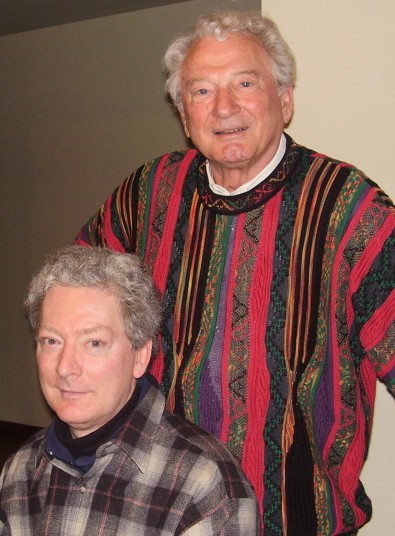
Portrait of a Mad Musician: Pianist Henning Vauth
Guest pianist Henning Vauth performs a portrait of a mad conductor, plus one of Mozart’s most popular sonatas and other works on Friday, March 9 at HSU.
German-born Henning Vauth won the Concours Grieg International Competition for Pianists in Norway and the IBLA Grand Prize International Competition in Italy. He has performed at Lincoln Center and major venues in Berlin and Paris.
At HSU he will play Kreisleriana by 19th century composer Robert Schumann, based on writer E.T.A. Hoffmann’s fictions about Johannes Kreisler, an eccentric orchestra conductor “freed from the shackles of society by the ‘madness’ of music.”
Vauth also performs Mozart’s Sonata in C Major, K. 330, described by Albert Einstein as “a masterpiece in which every note belongs—one of the most lovable works Mozart ever wrote.”
He concludes with piano transcriptions of works by Bach (“Jesu, Joy of Man’s Desiring”), Rachmaninoff (“Daisies”), and from Donizetti’s opera Lucia de Lammermoor.
Pianist Henning Vauth performs on Friday March 9 at 8 p.m.in Fulkerson Recital Hall on the Humboldt State University campus in Arcata. Tickets $8/$3 from the HSU Box Office (826-3928) or at the door. A Guest Artists concert produced by the HSU Music Department.
Media: Arcata Eye, Humboldt State Now
Archive 2006-2016 pre-production information, Humboldt State University Department of Music Events in Arcata, California. HSU Ticket Office: 707 826-3928. Music Department: 707 826-3531.
Showing posts with label Mozart. Show all posts
Friday, March 09, 2012
Program: Henning Vauth, Piano
Kreisleriana, Op. 16 Robert Schumann
1. Äußerst bewegt (Extremely animated) (1810-1856)
2. Sehr innig und nicht zu rasch (Very inwardly and not too quickly)
3. Sehr aufgeregt (Very agitated)
4. Sehr langsam (Very slowly)
5. Sehr lebhaft (Very lively)
6. Sehr langsam (Very slowly)
7. Sehr rasch (Very fast)
8. Schnell und spielend (Fast and playful)
Sonata in C major, K. 330 Wolfgang Amadeus Mozart
1. Allegro moderato (1756-1791)
2. Andante cantabile
3. Allegretto
Three Transcriptions
“Jesu, Joy of Man’s Desiring” Bach/arr. Myra Hess
(1890-1965)
“Daisies” Sergei Rachmaninoff
(1873-1943)
“Andante Finale de Lucia di Lammermoor” for the left hand only, Op. 13 Theodor Leschetizky
(1830-1915)
Biography
German pianist Henning Vauth serves as Assistant Professor of Music – Piano and Coordinator of Keyboard Studies at Marshall University. A laureate of the Concours Grieg International Competition for Pianists in Norway (Schubert Prize) and the IBLA Grand Prize International Piano Competition in Italy, he has performed at Alice Tully Hall, Lincoln Center in New York, the Konzerthaus in Berlin, Salle Munch in Paris, and Salle Molière in Lyon, France.
He holds a Doctor of Musical Arts in Piano Performance and Literature from the Eastman School of Music, in addition to further degrees in piano performance and pedagogy from the Hochschule für Musik und Theater (Hannover), the Ecole Normale de Musique "Alfred Cortot" (Paris), and Western Michigan University - piano study with Nelita True, Nelson Delle-Vigne Fabbri, and Einar Steen-Nokleberg.
He appears frequently as guest artist at institutions across Europe and the United States and is active as adjudicator for several competitions, including the IBLA Grand Prize International Piano Competition in Sicily, Italy and the Georgia and West Virginia MTNA competitions. He is a member of Pi Kappa Lambda (National Music Honor Society) and MTNA and a former full-time faculty member at Auburn University.
In collaboration with the Institute of Music Physiology and Musicians' Medicine at the HMT Hannover he co-authored articles in the peer-reviewed American journals Human Movement Science (Influence of Practice on the Development of Motor Skills in Pianists, 2009) and Movement Disorders (Quantification of Focal Dystonia in Pianists using Scale Analysis, 2004).
Kreisleriana, Op. 16 Robert Schumann
1. Äußerst bewegt (Extremely animated) (1810-1856)
2. Sehr innig und nicht zu rasch (Very inwardly and not too quickly)
3. Sehr aufgeregt (Very agitated)
4. Sehr langsam (Very slowly)
5. Sehr lebhaft (Very lively)
6. Sehr langsam (Very slowly)
7. Sehr rasch (Very fast)
8. Schnell und spielend (Fast and playful)
Sonata in C major, K. 330 Wolfgang Amadeus Mozart
1. Allegro moderato (1756-1791)
2. Andante cantabile
3. Allegretto
Three Transcriptions
“Jesu, Joy of Man’s Desiring” Bach/arr. Myra Hess
(1890-1965)
“Daisies” Sergei Rachmaninoff
(1873-1943)
“Andante Finale de Lucia di Lammermoor” for the left hand only, Op. 13 Theodor Leschetizky
(1830-1915)
Biography
German pianist Henning Vauth serves as Assistant Professor of Music – Piano and Coordinator of Keyboard Studies at Marshall University. A laureate of the Concours Grieg International Competition for Pianists in Norway (Schubert Prize) and the IBLA Grand Prize International Piano Competition in Italy, he has performed at Alice Tully Hall, Lincoln Center in New York, the Konzerthaus in Berlin, Salle Munch in Paris, and Salle Molière in Lyon, France.
He holds a Doctor of Musical Arts in Piano Performance and Literature from the Eastman School of Music, in addition to further degrees in piano performance and pedagogy from the Hochschule für Musik und Theater (Hannover), the Ecole Normale de Musique "Alfred Cortot" (Paris), and Western Michigan University - piano study with Nelita True, Nelson Delle-Vigne Fabbri, and Einar Steen-Nokleberg.
He appears frequently as guest artist at institutions across Europe and the United States and is active as adjudicator for several competitions, including the IBLA Grand Prize International Piano Competition in Sicily, Italy and the Georgia and West Virginia MTNA competitions. He is a member of Pi Kappa Lambda (National Music Honor Society) and MTNA and a former full-time faculty member at Auburn University.
In collaboration with the Institute of Music Physiology and Musicians' Medicine at the HMT Hannover he co-authored articles in the peer-reviewed American journals Human Movement Science (Influence of Practice on the Development of Motor Skills in Pianists, 2009) and Movement Disorders (Quantification of Focal Dystonia in Pianists using Scale Analysis, 2004).
Friday, December 12, 2008
Additional Notes
“Idomeneo Overture” is the most familiar part of Mozart’s seldom performed opera, “Idomeneo.” The opera is in Italian but the music is considered to be in the French style. It is based on Greek myth and set on the island of Crete after the Trojan war. Among the dramatic events in Mozart’s opera are a storm at sea and an attack of the island by a sea monster.
Alexander Borodin was a 19th century Russian composer, part of a group dedicated to developing Russian art music. The musical “Kismet” borrowed some of his musical themes from his opera “Prince Igor.” “In the Steppes of Central Asia” is a symphonic poem written to celebrate the silver anniversary of the reign of Alexander II. It was first performed in 1880, and remains a popular concert piece.
Aaron Copland (1900-1990) was among the most famous modern American composers. “Hoedown” is the finale of his 1942 ballet, “Rodeo,” written for choreographer Agnes de Mille, who herself danced a major role at the Metropolitan Opera premiere. Like many of Copland’s famous pieces, this was based on an American folk tune—in this case, Appalachian fiddler W.M. Stepp’s version of a square dance tune, “Bonypart.” Copland’s “Hoedown” borrowed specifically from Ruth Crawford Seeger’s piano transcription, which she made for the Alan Lomax and Seeger collection, “Our Singing Country,” for the Library of Congress. It has become a familiar American tune.
Arthur Honegger (1892-1955) was a modernist composer based in Paris. In addition to symphonic and chamber works, he wrote for ballet, opera and film, including the score for the groundbreaking Abel Gance epic, “Napoleon.” His choral works include "Le Roi David" ("King David") and the Christmas Cantata to be performed by the Humboldt Symphony and three choral groups, “Une Cantale De Noel.” Written in 1953, it was Honegger’s final composition.
Francesco Durante (1684-1755) was an Italian composer of sacred music as well as a famous teacher. He is known for his harmonies in the Baroque style. The Magnificat is a canticle in various Christian church services, with words taken from the Gospel of Luke expressing the Virgin Mary’s profession of faith. Many composers have written Magnificats (Durante alone wrote several) including Bach and Monteverde.
“Idomeneo Overture” is the most familiar part of Mozart’s seldom performed opera, “Idomeneo.” The opera is in Italian but the music is considered to be in the French style. It is based on Greek myth and set on the island of Crete after the Trojan war. Among the dramatic events in Mozart’s opera are a storm at sea and an attack of the island by a sea monster.
Alexander Borodin was a 19th century Russian composer, part of a group dedicated to developing Russian art music. The musical “Kismet” borrowed some of his musical themes from his opera “Prince Igor.” “In the Steppes of Central Asia” is a symphonic poem written to celebrate the silver anniversary of the reign of Alexander II. It was first performed in 1880, and remains a popular concert piece.
Aaron Copland (1900-1990) was among the most famous modern American composers. “Hoedown” is the finale of his 1942 ballet, “Rodeo,” written for choreographer Agnes de Mille, who herself danced a major role at the Metropolitan Opera premiere. Like many of Copland’s famous pieces, this was based on an American folk tune—in this case, Appalachian fiddler W.M. Stepp’s version of a square dance tune, “Bonypart.” Copland’s “Hoedown” borrowed specifically from Ruth Crawford Seeger’s piano transcription, which she made for the Alan Lomax and Seeger collection, “Our Singing Country,” for the Library of Congress. It has become a familiar American tune.
Arthur Honegger (1892-1955) was a modernist composer based in Paris. In addition to symphonic and chamber works, he wrote for ballet, opera and film, including the score for the groundbreaking Abel Gance epic, “Napoleon.” His choral works include "Le Roi David" ("King David") and the Christmas Cantata to be performed by the Humboldt Symphony and three choral groups, “Une Cantale De Noel.” Written in 1953, it was Honegger’s final composition.
Francesco Durante (1684-1755) was an Italian composer of sacred music as well as a famous teacher. He is known for his harmonies in the Baroque style. The Magnificat is a canticle in various Christian church services, with words taken from the Gospel of Luke expressing the Virgin Mary’s profession of faith. Many composers have written Magnificats (Durante alone wrote several) including Bach and Monteverde.
Labels:
Carol Ryder,
Copland,
Harley Muilenburg,
Mozart,
Paul Cummings
Sunday, November 09, 2008
Paul Cummings: Better Late Than Never for the Clarinet
Concertgoers—not to mention jazz fans—are used to the clarinet as a standard musical instrument…but it wasn’t always so.
“There was no clarinet in the Renaissance or the Baroque period,” HSU professor Paul Cummings points out. “In something like three hundred years of western music, there was basically nothing written for the clarinet.”
But a lot of great music has been written for it since, and clarinetist Paul Cummings will play three works—one acknowledged masterpiece, one well-regarded piece and one that is seldom performed—on Sunday, November 9 in Fulkerson Recital Hall.
It was only at the turn of the 18th century that technology allowed the modern clarinet to be adapted from an earlier instrument. Fortunately, that was just in time to catch the ear of a composer named Wolfgang Amadeus Mozart, who thought the clarinet best approximated the qualities of the human voice.
“Mozart took a liking to it, and he wrote some of his greatest works for this instrument,” Cummings said, “including his clarinet concerto, a beautiful clarinet quintet, and the clarinet trio we will perform.”
Together with pianist John Chernoff (who accompanies him on all three pieces) and Karen Davy on viola, Cummings plays Mozart’s Trio for Clarinet, Viola and Piano.
“This piece has three movements but it’s a little unusual in that it has no slow movement,” Cummings explained. “It’s also interesting because it is balanced equally among the three instruments. It is so much fun to play this piece—you can tell why it is a masterpiece.”
Cummings and Chernoff combine on another familiar work in the clarinet repertoire, the Grand Duo Concertant by German composer Karl Maria von Weber.
“Weber was known first of all as a composer of German opera,” Cummings explained. “His music is very dramatic. So in this piece there are some really wild contrasts, as you might hear in an opera. There are very loud and very soft parts, tempo changes—all very intense. It’s kind of a clarinet showpiece. That’s partly because Weber, like Mozart, understands the strengths of the instrument. Not every composer understands what the clarinet can do.”
Another composer who did is not as famous for it. “Charles Villiers Stanford was known mostly as a teacher,” Cummings said. His students at the Royal College of Music and Cambridge University included composers Gustav Holst and Ralph Vaughan Williams. Though he taught during the musical ferment of the late nineteenth and early twentieth centuries, Stanford’s predilections as a composer favored a slightly earlier age.
“He reminded a lot of people of Brahms. So his work is not part of the standard repertoire—maybe because people consider his work a Brahms knock-off. But the piece we’re doing--Stanford’s Sonata for Clarinet and Piano—has its original features.”
“It has three movement, with a fascinating slow movement based on an Irish folk song,” Cummings said. “Stanford was born in Dublin. It’s a kind of lullaby—very tender, simple at times, but with clarinet passages that decorate the melody. For me that beautiful second movement is a highlight.”
Music professor Paul Cummings is also the conductor of the Humboldt Symphony and director of the HSU Symphonic Band. His clarinet concert begins at 8 p.m. on Sunday, November 9 in the Fulkerson Recital Hall on the HSU campus. Tickets are $8 general, $3 students/seniors from the HSU Box Office (826-3928) or at the door. A Faculty Artists Series concert produced by the HSU Department of Music.
Media: Humboldt State Now
Concertgoers—not to mention jazz fans—are used to the clarinet as a standard musical instrument…but it wasn’t always so.
“There was no clarinet in the Renaissance or the Baroque period,” HSU professor Paul Cummings points out. “In something like three hundred years of western music, there was basically nothing written for the clarinet.”
But a lot of great music has been written for it since, and clarinetist Paul Cummings will play three works—one acknowledged masterpiece, one well-regarded piece and one that is seldom performed—on Sunday, November 9 in Fulkerson Recital Hall.
It was only at the turn of the 18th century that technology allowed the modern clarinet to be adapted from an earlier instrument. Fortunately, that was just in time to catch the ear of a composer named Wolfgang Amadeus Mozart, who thought the clarinet best approximated the qualities of the human voice.
“Mozart took a liking to it, and he wrote some of his greatest works for this instrument,” Cummings said, “including his clarinet concerto, a beautiful clarinet quintet, and the clarinet trio we will perform.”
Together with pianist John Chernoff (who accompanies him on all three pieces) and Karen Davy on viola, Cummings plays Mozart’s Trio for Clarinet, Viola and Piano.
“This piece has three movements but it’s a little unusual in that it has no slow movement,” Cummings explained. “It’s also interesting because it is balanced equally among the three instruments. It is so much fun to play this piece—you can tell why it is a masterpiece.”
Cummings and Chernoff combine on another familiar work in the clarinet repertoire, the Grand Duo Concertant by German composer Karl Maria von Weber.
“Weber was known first of all as a composer of German opera,” Cummings explained. “His music is very dramatic. So in this piece there are some really wild contrasts, as you might hear in an opera. There are very loud and very soft parts, tempo changes—all very intense. It’s kind of a clarinet showpiece. That’s partly because Weber, like Mozart, understands the strengths of the instrument. Not every composer understands what the clarinet can do.”
Another composer who did is not as famous for it. “Charles Villiers Stanford was known mostly as a teacher,” Cummings said. His students at the Royal College of Music and Cambridge University included composers Gustav Holst and Ralph Vaughan Williams. Though he taught during the musical ferment of the late nineteenth and early twentieth centuries, Stanford’s predilections as a composer favored a slightly earlier age.
“He reminded a lot of people of Brahms. So his work is not part of the standard repertoire—maybe because people consider his work a Brahms knock-off. But the piece we’re doing--Stanford’s Sonata for Clarinet and Piano—has its original features.”
“It has three movement, with a fascinating slow movement based on an Irish folk song,” Cummings said. “Stanford was born in Dublin. It’s a kind of lullaby—very tender, simple at times, but with clarinet passages that decorate the melody. For me that beautiful second movement is a highlight.”
Music professor Paul Cummings is also the conductor of the Humboldt Symphony and director of the HSU Symphonic Band. His clarinet concert begins at 8 p.m. on Sunday, November 9 in the Fulkerson Recital Hall on the HSU campus. Tickets are $8 general, $3 students/seniors from the HSU Box Office (826-3928) or at the door. A Faculty Artists Series concert produced by the HSU Department of Music.
Media: Humboldt State Now
Labels:
Faculty Artist Series,
Mozart,
Paul Cummings
Friday, May 09, 2008
A Concert in Contrasts
The HSU University Singers and the Humboldt Chorale present a contrasting program for their combined spring concert on Friday, May 9 in the Fulkerson Recital Hall.
The University Singers perform sections of two classic works in the category of sacred music. The Requiem Mass in D Minor (1791) was the last work composed by Wolfgang Amadeus Mozart. The Singers present six movements from the Requiem, including the “Tuba mirum,” which contains solos for all four vocal parts. These will be performed by Kaia Renouf (soprano), Veronica Stahl (alto), David Powell (tenor) and Kevin Nakatani (bass.)
The second work is from a very different era: “Symphony of Psalms,” written by Igor Stravinsky in 1930. The University Singers perform the final movement of this three movement piece. Each movement centers on a particular psalm. The third movement expresses Psalm 150, with its theme of praise.
Both of these works were written for orchestra and chorus. In this concert, HSU Music Department staff pianist will play the piano reductions of the orchestral score. “Chernoff’s amazing technical and musical abilities at the keyboard will be featured in both selections,” said Harley Muilenburg, conductor of the University Singers.
In the second half of the concert, the Humboldt Chorale changes the mood with a selection of show tunes, from as far back as Gilbert and Sullivan’s “Pirates of Penzance” (1879) and the first true American musical, Jerome Kern’s “Show Boat” (1927), to songs by Cole Porter, Rodgers and Hammerstein and Leonard Bernstein.
The Rodgers and Hammerstein songs are “June Is Busting Out All Over” from the 1945 musical “Carousel,” and the title song of the 1943 musical “Oklahoma.” Leonard Bernstein is represented by “Somewhere” from “West Side Story” (written with Stephen Sondheim), which premiered on Broadway in 1957, and “Make Our Garden Grow” from “Candide” (1956.) The Cole Porter tune is “Anything Goes” from the 1934 musical of the same name.
The Humboldt Chorale, under the direction of Carol Ryder, consists of 70 singers. As it has since its founding a half century ago, the Chorale consists of HSU students and members of local communities. Larry Pitts is the keyboard accompanist.
This combined concert on May 9 begins at 8 PM in the Fulkerson Recital Hall on the HSU campus in Arcata. Tickets are $7 general, $3 students and seniors, from HSU Ticket Office (826-3928) or at the door. HSU students free with ID. The concert is produced by the HSU Department of Music.
The HSU University Singers and the Humboldt Chorale present a contrasting program for their combined spring concert on Friday, May 9 in the Fulkerson Recital Hall.
The University Singers perform sections of two classic works in the category of sacred music. The Requiem Mass in D Minor (1791) was the last work composed by Wolfgang Amadeus Mozart. The Singers present six movements from the Requiem, including the “Tuba mirum,” which contains solos for all four vocal parts. These will be performed by Kaia Renouf (soprano), Veronica Stahl (alto), David Powell (tenor) and Kevin Nakatani (bass.)
The second work is from a very different era: “Symphony of Psalms,” written by Igor Stravinsky in 1930. The University Singers perform the final movement of this three movement piece. Each movement centers on a particular psalm. The third movement expresses Psalm 150, with its theme of praise.
Both of these works were written for orchestra and chorus. In this concert, HSU Music Department staff pianist will play the piano reductions of the orchestral score. “Chernoff’s amazing technical and musical abilities at the keyboard will be featured in both selections,” said Harley Muilenburg, conductor of the University Singers.
In the second half of the concert, the Humboldt Chorale changes the mood with a selection of show tunes, from as far back as Gilbert and Sullivan’s “Pirates of Penzance” (1879) and the first true American musical, Jerome Kern’s “Show Boat” (1927), to songs by Cole Porter, Rodgers and Hammerstein and Leonard Bernstein.
The Rodgers and Hammerstein songs are “June Is Busting Out All Over” from the 1945 musical “Carousel,” and the title song of the 1943 musical “Oklahoma.” Leonard Bernstein is represented by “Somewhere” from “West Side Story” (written with Stephen Sondheim), which premiered on Broadway in 1957, and “Make Our Garden Grow” from “Candide” (1956.) The Cole Porter tune is “Anything Goes” from the 1934 musical of the same name.
The Humboldt Chorale, under the direction of Carol Ryder, consists of 70 singers. As it has since its founding a half century ago, the Chorale consists of HSU students and members of local communities. Larry Pitts is the keyboard accompanist.
This combined concert on May 9 begins at 8 PM in the Fulkerson Recital Hall on the HSU campus in Arcata. Tickets are $7 general, $3 students and seniors, from HSU Ticket Office (826-3928) or at the door. HSU students free with ID. The concert is produced by the HSU Department of Music.
Monday, May 05, 2008
Chamber Music for Strings
Four distinguished local string musicians play Bach, Mozart, Dvorak and more on Monday, May 5 at 8 PM in the Fulkerson Recital Hall on the HSU campus in Arcata. Tickets are $8 general, $3 students and seniors, from HSU Ticket Office (826-3928) or at the door. Produced by HSU Department of Music.
Adding It Up: Four Players, Four Eras in Four Presentations
Four distinguished local string musicians present a solo, a duet, a trio and finally a quartet in a concert that begins with the Baroque and ends with a 21st century work by one of the participants, on Monday, May 5 at 8 PM in the Fulkerson Recital Hall on the HSU campus in Arcata.
The players are Cindy Moyer, HSU Professor of Violin, Viola and Music Theory (violin); Karen Davy, who teaches strings at HSU and North Coast Preparatory Academy of the Arts (viola); Halim Beere, concertmaster of the Eureka Symphony (violin); and David Davis, principal cellist of the Eureka Symphony (cello.)
Cindy Moyer begins with the Partita #2 in D Minor, a composition for solo violin by the Baroque master Johann Sebastian Bach. Moyer is joined by Karen Davy on viola for Three Madrigals for Violin and Viola by 20th century composer Bohuslav Martinu. Born in Czechoslovakia, Martinu was exiled to the U.S. during World War II, where he wrote this piece in 1947.
Then violinist Halim Beere joins Moyer and Davy for a work by Antonin Dvorak: Terzetto in C Major for Two Violins and Viola. Another Czech composer who came to America but in the late 19th century, Dvorak is known as an exemplar of the Romantic era. This terzetto (a trio for stringed instruments) was also written in the U.S., in 1887.
Cellist David Davis completes the quartet for two selections. Wolfgang Amadeus Mozart’s String Quartet #23 in F Major exemplifies the classical era, while a new work brings the concert into the 21st century: Octogon by violinst Halim Beere. Beere is a recent HSU graduate in composition and violin performance. He will begin graduate studies in composition at the University of Illinois in the fall.
Tickets for the May 5 concert are $8 general, $3 students and seniors, from HSU Ticket Office (826-3928) or at the door.
Media: Eureka Reporter E Magazine May 2-8.
Four distinguished local string musicians present a solo, a duet, a trio and finally a quartet in a concert that begins with the Baroque and ends with a 21st century work by one of the participants, on Monday, May 5 at 8 PM in the Fulkerson Recital Hall on the HSU campus in Arcata.
The players are Cindy Moyer, HSU Professor of Violin, Viola and Music Theory (violin); Karen Davy, who teaches strings at HSU and North Coast Preparatory Academy of the Arts (viola); Halim Beere, concertmaster of the Eureka Symphony (violin); and David Davis, principal cellist of the Eureka Symphony (cello.)
Cindy Moyer begins with the Partita #2 in D Minor, a composition for solo violin by the Baroque master Johann Sebastian Bach. Moyer is joined by Karen Davy on viola for Three Madrigals for Violin and Viola by 20th century composer Bohuslav Martinu. Born in Czechoslovakia, Martinu was exiled to the U.S. during World War II, where he wrote this piece in 1947.
Then violinist Halim Beere joins Moyer and Davy for a work by Antonin Dvorak: Terzetto in C Major for Two Violins and Viola. Another Czech composer who came to America but in the late 19th century, Dvorak is known as an exemplar of the Romantic era. This terzetto (a trio for stringed instruments) was also written in the U.S., in 1887.
Cellist David Davis completes the quartet for two selections. Wolfgang Amadeus Mozart’s String Quartet #23 in F Major exemplifies the classical era, while a new work brings the concert into the 21st century: Octogon by violinst Halim Beere. Beere is a recent HSU graduate in composition and violin performance. He will begin graduate studies in composition at the University of Illinois in the fall.
Tickets for the May 5 concert are $8 general, $3 students and seniors, from HSU Ticket Office (826-3928) or at the door.
Media: Eureka Reporter E Magazine May 2-8.
Sunday, May 13, 2007
Music from North Coast Communites
The Meadowood Quartet, Springville Quartet, and Friends of Mozart quintet--three chamber music ensembles composed of players from six North Coast communities-- will perform music for strings, winds and piano by Mozart, Haydn and other composers, at 8 PM on Sunday, May 13, in the Fulkerson Recital Hall on the HSU campus in Arcata. Tickets are $8 general, $3 students/seniors, from the HSU Ticket Office (826-3928) or at the door. A production of the HSU Music Department.
Three Quartets of 101 Flyers Combine for Chamber Music Concert
The Meadowood Quartet, Springville Quartet, and Friends of Mozart quintet--three chamber music ensembles comprised of players from various North Coast communities—will take the Fulkerson Recital Hall stage on Sunday night, May 13, in what participants hope will be the first of a regular series.
“The idea is to present two of these concerts each year, during breaks in HSU’s academic year,” said Valgene Phillips, coordinator for the event, who is also a past chairman of the HSU Music Department. “ The purpose is to give community players a good place to play, and give local audience more live chamber music concerts.” Facilitated by current chairman, Kenneth Ayoob, the Music Department is sponsoring the evening.
But though this is the first such event, most of the performers will not be new to Fulkerson Recital Hall. “They’ve been on that stage many times, as HSU students, Humboldt Symphony members and participants in summer workshops,” Phillips said. But they are returning in a new way.
The difference this time is not only that these ensembles are small (four or five members each), or that they play a particular kind of music. It’s that these groups organize themselves, and they come from communities all over the North Coast.
“Our players are ‘101 Flyers,’” Phillips said. “They live in communities between McKinleyville and Redway. They meet in someone’s home every week to play, just as chamber music groups did in Mozart’s time.” The three groups include residents of Eureka, Fortuna, Arcata and Blue Lake as well as McKinleyville and Redway.
Many such groups never play in public, Phillips said, but these three ensembles have been preparing for this concert for months. “They coach themselves, refining the music they’ve selected over several months of weekly rehearsals.”
Since each group has a different combination of instruments, Sunday’s audience will be presented with a variety of chamber music sounds. The Medowood Quartet is a string quartet: Betty Bliss (Redway) and Marilyn Page (Arcata) playing violins, Stefan Vaughan (Eureka) viola, and Eric Jones (McKinleyville) cello. For this first concert they will play Haydn’s Quartet in G and Carlos Gardel's “Tango.”
The Springville Quartet features four French horns. Michael Thompson (Redway) Christine Foreman (Fortuna) Robert Peoples (Eureka) and ValgenePhillips (McKinleyville) will play two works by Russian composers, and shorter pieces by Lowell Shaw and Val Phillips.
Friends of Mozart is a quintet: Felicia Oldfather (from McKinleyville) on piano, Ellen Weiss (Arcata) on oboe, Gwen Rust (McKinleyville) on clarinet, Justin Sousa (Blue Lake) on bassoon and Val Phillips on French horn. They will play Mozart’s Quintet in E Flat for Piano and Winds.
The chamber music concert begins at 8 PM on Sunday, May 13 in the Fulkerson Recital Hall on the HSU campus in Arcata. Tickets are $8 general, $3 students/seniors, from the HSU Ticket Office (826-3928) or at the door. A production of the HSU Music Department.
The Meadowood Quartet, Springville Quartet, and Friends of Mozart quintet--three chamber music ensembles comprised of players from various North Coast communities—will take the Fulkerson Recital Hall stage on Sunday night, May 13, in what participants hope will be the first of a regular series.
“The idea is to present two of these concerts each year, during breaks in HSU’s academic year,” said Valgene Phillips, coordinator for the event, who is also a past chairman of the HSU Music Department. “ The purpose is to give community players a good place to play, and give local audience more live chamber music concerts.” Facilitated by current chairman, Kenneth Ayoob, the Music Department is sponsoring the evening.
But though this is the first such event, most of the performers will not be new to Fulkerson Recital Hall. “They’ve been on that stage many times, as HSU students, Humboldt Symphony members and participants in summer workshops,” Phillips said. But they are returning in a new way.
The difference this time is not only that these ensembles are small (four or five members each), or that they play a particular kind of music. It’s that these groups organize themselves, and they come from communities all over the North Coast.
“Our players are ‘101 Flyers,’” Phillips said. “They live in communities between McKinleyville and Redway. They meet in someone’s home every week to play, just as chamber music groups did in Mozart’s time.” The three groups include residents of Eureka, Fortuna, Arcata and Blue Lake as well as McKinleyville and Redway.
Many such groups never play in public, Phillips said, but these three ensembles have been preparing for this concert for months. “They coach themselves, refining the music they’ve selected over several months of weekly rehearsals.”
Since each group has a different combination of instruments, Sunday’s audience will be presented with a variety of chamber music sounds. The Medowood Quartet is a string quartet: Betty Bliss (Redway) and Marilyn Page (Arcata) playing violins, Stefan Vaughan (Eureka) viola, and Eric Jones (McKinleyville) cello. For this first concert they will play Haydn’s Quartet in G and Carlos Gardel's “Tango.”
The Springville Quartet features four French horns. Michael Thompson (Redway) Christine Foreman (Fortuna) Robert Peoples (Eureka) and ValgenePhillips (McKinleyville) will play two works by Russian composers, and shorter pieces by Lowell Shaw and Val Phillips.
Friends of Mozart is a quintet: Felicia Oldfather (from McKinleyville) on piano, Ellen Weiss (Arcata) on oboe, Gwen Rust (McKinleyville) on clarinet, Justin Sousa (Blue Lake) on bassoon and Val Phillips on French horn. They will play Mozart’s Quintet in E Flat for Piano and Winds.
The chamber music concert begins at 8 PM on Sunday, May 13 in the Fulkerson Recital Hall on the HSU campus in Arcata. Tickets are $8 general, $3 students/seniors, from the HSU Ticket Office (826-3928) or at the door. A production of the HSU Music Department.
Saturday, January 27, 2007
Guest Artist Series: Mozart's Birthday
Guest artist James Marchand will perform two Mozart piano sonatas, and scholar Robert Spaethling will read from his new translation of Mozart’s letters, to celebrate Mozart’s 251st birthday on Saturday, January 27 at 8 PM in the Fulkerson Recital Hall on the HSU campus in Arcata. $8 general, $3 students/seniors. Tickets: : 826-3928.
Sonatas and Letters on Mozart’s Birthday at HSU
Sure, people make a fuss on your 250th birthday, but where is everybody on your 251st? Well, the HSU Department of Music will be throwing a party for Wolfgang Amadeus Mozart on his 251st birthday, January 27, featuring pianist James Marchand performing two Mozart piano sonatas, and literary scholar Robert Spaethling, reading from Mozart’s letters.
This Faculty Guest Artist series event begins at 8 PM on Saturday, January 27 in the Fulkerson Recital Hall on the HSU campus in Arcata.
James Marchand performs in the Bay Area. An HSU graduate, he returns to campus after 30 years. He will play Mozart’s Piano Sonata in A major, K. 331 and the Piano Sonata in C minor, K. 457.
A professor emeritus of German at the University of Massachusetts, Robert Spaethling will read his from his new translations of Mozart’s letters in his book, Mozart’s Letters, Mozart’s Life.
Admission is $8 general, $3 students and seniors. Tickets are available from the HSU Ticket Office: 826-3928.
Sure, people make a fuss on your 250th birthday, but where is everybody on your 251st? Well, the HSU Department of Music will be throwing a party for Wolfgang Amadeus Mozart on his 251st birthday, January 27, featuring pianist James Marchand performing two Mozart piano sonatas, and literary scholar Robert Spaethling, reading from Mozart’s letters.
This Faculty Guest Artist series event begins at 8 PM on Saturday, January 27 in the Fulkerson Recital Hall on the HSU campus in Arcata.
James Marchand performs in the Bay Area. An HSU graduate, he returns to campus after 30 years. He will play Mozart’s Piano Sonata in A major, K. 331 and the Piano Sonata in C minor, K. 457.
A professor emeritus of German at the University of Massachusetts, Robert Spaethling will read his from his new translations of Mozart’s letters in his book, Mozart’s Letters, Mozart’s Life.
Admission is $8 general, $3 students and seniors. Tickets are available from the HSU Ticket Office: 826-3928.
The Program
Introduction of James Marchand by Robert Spaethling
Introductory Remarks to Mozart’s Piano Sonata in A major by Robert Spaethling
James Marchand performs Mozart’s Piano Sonata in A major, K. 331
Robert Spaethling talks about Mozart as a correspondent and reads excerpts from his letters.
Intermission
Introductory Remarks to Mozart’s Piano Sonata in C minor by Robert Spaethling
James Marchand performas Mozart’s Piano Sonata in C minor, K. 457 .
James Marchand teaches piano in Novato, CA and gives public performances in the Bay Area.
Robert Spaethling taught German language, literature, and culture at Harvard University, Williams College, UCSD, and UMass/Boston, where he also served as Dean of Graduate School, Vice Chancellor for Academic Affairs, and Provost of the University. He is now Professor Emeritus and lives with his wife Ellen in Larkspur, CA.
Introduction of James Marchand by Robert Spaethling
Introductory Remarks to Mozart’s Piano Sonata in A major by Robert Spaethling
James Marchand performs Mozart’s Piano Sonata in A major, K. 331
Robert Spaethling talks about Mozart as a correspondent and reads excerpts from his letters.
Intermission
Introductory Remarks to Mozart’s Piano Sonata in C minor by Robert Spaethling
James Marchand performas Mozart’s Piano Sonata in C minor, K. 457 .
James Marchand teaches piano in Novato, CA and gives public performances in the Bay Area.
Robert Spaethling taught German language, literature, and culture at Harvard University, Williams College, UCSD, and UMass/Boston, where he also served as Dean of Graduate School, Vice Chancellor for Academic Affairs, and Provost of the University. He is now Professor Emeritus and lives with his wife Ellen in Larkspur, CA.
Friday, November 03, 2006
Opera Workshop
From the sublime to the ridiculous, Mozart to Sondheim and Gilbert & Sullivan: HSU Opera Workshop Singers present staged selections from opera, operetta and musical theatre on Friday, November 3 at 8 PM, and again on Sunday, Nov. 5 at 8 PM, in the Fulkerson Recital Hall on the HSU campus in Arcata. $6 general, $2 student/senior, HSU students free with ID, from HSU Ticket Office (826-3928) or at the door. Produced by HSU Music Department: 826-3531. Elisabeth Harrington, stage director.
Friday, October 06, 2006
Humboldt Symphony
George Gershwin’s Rhapsody in Blue with Deborah Clasquin on piano, Beethoven’s Fifth Symphony and Mozart’s “Paris” Symphony #31 will be played by the Humboldt Symphony Orchestra, Kenneth Ayoob conducting, on October 13 and 14 at 8 PM in the Fulkerson Recital Hall on the HSU campus in Arcata. Tickets are $6 general, $2 students and seniors, free to HSU students with ID, at HSU ticket office or at the door. Reservations: 826-3928.
George Gershwin’s “Rhapsody in Blue,” featuring Humboldt favorite, Deborah Clasquin at the piano, plus Beethoven’s Fifth Symphony and a symphony by Mozart---it’s a combination that seems tailor-made for audience enthusiasm.
That’s the program for the Humboldt Symphony Orchestra’s first concert of its 81st season, to be performed on Friday, October 13 and Saturday, October 14 at 8 PM in the Fulkerson Recital Hall on the HSU campus in Arcata. Tickets are $6 general, $2 students and seniors; free to HSU students with ID.
While acknowledging that these works are among the most exciting and popular in the classical repertoire, Humboldt Symphony conductor Kenneth Ayoob didn’t choose them for that reason. “That audiences will relate to this music is important,” he said, “but it wasn’t my primary consideration in choosing the program.”
The Humboldt Symphony Orchestra is comprised of community members (including several advanced high school players) but mostly of “a richer mix of HSU students than it’s had in awhile,” Ayoob said. As a professor of Music and chair of the HSU Music department, he began his selection process with the question, “What do the students need to know about?”
His first answer was simple: Beethoven.
“There are certain things about the way a Beethoven piece is constructed that students need to learn---he’s not like anybody else,” Ayoob said. Beethoven’s Symphony #5 “ is a work they should know, and they should know it from the inside.”
Mozart is similarly indispensable. “In building an orchestra, it’s always good to do Mozart. He wrote so much, especially for strings. We’ve got a particularly rich mix in strings this year.”
Ayoob chose Mozart’s Symphony #31 (known as the “Paris” symphony) partly because it also had good parts for the wind section. “I’ve got a fairly young wind section,” he said, “so I wanted to make sure they got this experience. This is something they can really do.”
It also becomes part of celebrating the 250th anniversary year of Mozart’s birth, which began with the Humboldt Symphony performing a Mozart concerto at their last concert, and the Faculty Artist Series Mozart concert last spring. “It’s short for a symphony,” Ayoob noted. “Just under 20 minutes, so it’s a good opener.”
The reason for selecting Gershwin’s most famous composition-- and one of the most famous pieces of American music-- was slightly different. “Deborah Clasquin and I had talked about her doing something with the orchestra for awhile,” Ayoob said, “and she told me she felt ready now, and she wanted to do ‘Rhapsody in Blue’.”
But Ayoob also saw the advantages for the student players. “I thought it would be great,” he said, “and also good experience for the orchestra. There are actually parts for saxophones in it, so a lot of our sax players who don’t often get the opportunity to play in the orchestra get to play this.” Employing as much of the orchestra as possible was also a consideration in choosing Beethoven’s Fifth. “It has trombones.”
After serving as conductor of the Eureka Symphony, Ayoob is beginning his fourth year conducting the Humboldt Symphony Orchestra. He’s hoping the trend of more student participation will continue. “We’d love to see more student players join us.”
Tickets for the October 13 and 14 concerts may be purchased at HSU ticket office or at the door. For reservations or information, call 826-3928.
The Program
Humboldt Symphony Orchestra:
Kenneth Ayoob, conductor
Karen Davy, assistant conductor
Saturday and Sunday, October 13th and 14th 2006
8:00 PM Fulkerson Rectial Hall
Symphony #31 (Paris) in D, k. 300a W. A. Mozart (1756 - 1791)
Allegro assai
Andante
Allegro
Rhapsody in Blue George Gershwin
(1898 – 1937)
Deborah Clasquin, piano arranged by Ferde Grofe
Intermission
Symphony #5, op. 67 in C minor Ludwig van Beethoven
(1770 – 1827)
Allegro con brio
Andante con moto
Allegro
Allegro - presto
The Players
Violin
Halim Beere, concertmaster
Ellis Britton
Sasha Chandler, associate concertmaster
Karen Normandia Davy, principal 2nd
Mary De Andreis
Bailey Dunwoody
Chelsea Morden
Kit Dols Morris
Marie Van Luven
Viola
Rebecca Downey
Mattie Eckstrom
Natalie Kramer
Don Morris
Maria Siler
Maria Zazueta
Cello
Laura Boxton
Christy Coranado
Margaret Burton
Mary Dunn
Cassie Moulton
Jack Turner
Andy Triechak, principal
Bass
Bobby Amirkan
Joshua Boronkay
Anastasia Ciau
Mary Delo
Rebekha Kass-Lent
Maia Wiitala
Shao Way Wu, principal, HSU faculty
Flute
Kate Bernet
Jacquelyn Joseph
Gabriel Roddenborn
Piccolo
Jacquelyn Joseph
Oboe
Brittany DePew
Maxine Sherry
Clarinet
Stephanie Douglass
Melissa Gussin
Jamie Parisi
Bass Clarinet
Melissa Gussin
Bassoon
Aaron Lopez
Karen Mejia
Saxophone
Jeanette Kyle
Dellamay Miller
Sky Miller
Horn
Christine Forman
Anwyn Halladay
Spencer Hitzerroth
Matt Morgan
Mike Thompson
Trumpet
Kyle Kaufman
Michel Navedo
Thomas Obeso
Trombone
Leah Jmaeff
Talon Nansel
Thomas Obeso
Kearney Vander Sal
Tuba
Andrew Miller
Timpani
Amy Cadle
Percussion
Daniel Grantz
Tyler Hunt
Jonathon Kipp
Kevin Repp
Rudy Slizewski
Banjo
Annabelle Cannon
Performers are listed alphabetically in order to emphasize the importance of each member’s contribution.
Media
North Coast Journal: "Sit down and make a list of the top 10 most memorable passages from classical music. Done? Ok, your number one is the thundering opening to Beethoven's Fifth Symphony--the 'da-da-da-DUM.' Somewhere in your top five, probably, is the thrilling clarinet glissando that kicks off George Gershwin's 'Rhapsody in Blue.' This weekend, you can have the somewhat unusual experience of hearing the Humboldt Symphony perform one right after the other. Inspired programming?
'When I sat down and looked at the program, I thought, 'This is kind of odd,' said conductor Kenneth Ayoob last week. But he noted that the Symphony has two functions--to teach students the nuts-and-bolts pieces they'll likely be playing throughout the rest of their careers, and to provide a program that the public will want to hear. Ths weekend's shows fulfill the first mission in spades, Ayoob figures.
How about the second? Well, the top dog Humboldt County pianist Deborah Clasquin taking the solo piano part for 'Rhapsody' (her first performance of the piece in Humboldt County, Ayoob believes) there's little danger of poor attendance."--Hank Sims
George Gershwin’s Rhapsody in Blue with Deborah Clasquin on piano, Beethoven’s Fifth Symphony and Mozart’s “Paris” Symphony #31 will be played by the Humboldt Symphony Orchestra, Kenneth Ayoob conducting, on October 13 and 14 at 8 PM in the Fulkerson Recital Hall on the HSU campus in Arcata. Tickets are $6 general, $2 students and seniors, free to HSU students with ID, at HSU ticket office or at the door. Reservations: 826-3928.
George Gershwin’s “Rhapsody in Blue,” featuring Humboldt favorite, Deborah Clasquin at the piano, plus Beethoven’s Fifth Symphony and a symphony by Mozart---it’s a combination that seems tailor-made for audience enthusiasm.
That’s the program for the Humboldt Symphony Orchestra’s first concert of its 81st season, to be performed on Friday, October 13 and Saturday, October 14 at 8 PM in the Fulkerson Recital Hall on the HSU campus in Arcata. Tickets are $6 general, $2 students and seniors; free to HSU students with ID.
While acknowledging that these works are among the most exciting and popular in the classical repertoire, Humboldt Symphony conductor Kenneth Ayoob didn’t choose them for that reason. “That audiences will relate to this music is important,” he said, “but it wasn’t my primary consideration in choosing the program.”
The Humboldt Symphony Orchestra is comprised of community members (including several advanced high school players) but mostly of “a richer mix of HSU students than it’s had in awhile,” Ayoob said. As a professor of Music and chair of the HSU Music department, he began his selection process with the question, “What do the students need to know about?”
His first answer was simple: Beethoven.
“There are certain things about the way a Beethoven piece is constructed that students need to learn---he’s not like anybody else,” Ayoob said. Beethoven’s Symphony #5 “ is a work they should know, and they should know it from the inside.”
Mozart is similarly indispensable. “In building an orchestra, it’s always good to do Mozart. He wrote so much, especially for strings. We’ve got a particularly rich mix in strings this year.”
Ayoob chose Mozart’s Symphony #31 (known as the “Paris” symphony) partly because it also had good parts for the wind section. “I’ve got a fairly young wind section,” he said, “so I wanted to make sure they got this experience. This is something they can really do.”
It also becomes part of celebrating the 250th anniversary year of Mozart’s birth, which began with the Humboldt Symphony performing a Mozart concerto at their last concert, and the Faculty Artist Series Mozart concert last spring. “It’s short for a symphony,” Ayoob noted. “Just under 20 minutes, so it’s a good opener.”
The reason for selecting Gershwin’s most famous composition-- and one of the most famous pieces of American music-- was slightly different. “Deborah Clasquin and I had talked about her doing something with the orchestra for awhile,” Ayoob said, “and she told me she felt ready now, and she wanted to do ‘Rhapsody in Blue’.”
But Ayoob also saw the advantages for the student players. “I thought it would be great,” he said, “and also good experience for the orchestra. There are actually parts for saxophones in it, so a lot of our sax players who don’t often get the opportunity to play in the orchestra get to play this.” Employing as much of the orchestra as possible was also a consideration in choosing Beethoven’s Fifth. “It has trombones.”
After serving as conductor of the Eureka Symphony, Ayoob is beginning his fourth year conducting the Humboldt Symphony Orchestra. He’s hoping the trend of more student participation will continue. “We’d love to see more student players join us.”
Tickets for the October 13 and 14 concerts may be purchased at HSU ticket office or at the door. For reservations or information, call 826-3928.
The Program
Humboldt Symphony Orchestra:
Kenneth Ayoob, conductor
Karen Davy, assistant conductor
Saturday and Sunday, October 13th and 14th 2006
8:00 PM Fulkerson Rectial Hall
Symphony #31 (Paris) in D, k. 300a W. A. Mozart (1756 - 1791)
Allegro assai
Andante
Allegro
Rhapsody in Blue George Gershwin
(1898 – 1937)
Deborah Clasquin, piano arranged by Ferde Grofe
Intermission
Symphony #5, op. 67 in C minor Ludwig van Beethoven
(1770 – 1827)
Allegro con brio
Andante con moto
Allegro
Allegro - presto
The Players
Violin
Halim Beere, concertmaster
Ellis Britton
Sasha Chandler, associate concertmaster
Karen Normandia Davy, principal 2nd
Mary De Andreis
Bailey Dunwoody
Chelsea Morden
Kit Dols Morris
Marie Van Luven
Viola
Rebecca Downey
Mattie Eckstrom
Natalie Kramer
Don Morris
Maria Siler
Maria Zazueta
Cello
Laura Boxton
Christy Coranado
Margaret Burton
Mary Dunn
Cassie Moulton
Jack Turner
Andy Triechak, principal
Bass
Bobby Amirkan
Joshua Boronkay
Anastasia Ciau
Mary Delo
Rebekha Kass-Lent
Maia Wiitala
Shao Way Wu, principal, HSU faculty
Flute
Kate Bernet
Jacquelyn Joseph
Gabriel Roddenborn
Piccolo
Jacquelyn Joseph
Oboe
Brittany DePew
Maxine Sherry
Clarinet
Stephanie Douglass
Melissa Gussin
Jamie Parisi
Bass Clarinet
Melissa Gussin
Bassoon
Aaron Lopez
Karen Mejia
Saxophone
Jeanette Kyle
Dellamay Miller
Sky Miller
Horn
Christine Forman
Anwyn Halladay
Spencer Hitzerroth
Matt Morgan
Mike Thompson
Trumpet
Kyle Kaufman
Michel Navedo
Thomas Obeso
Trombone
Leah Jmaeff
Talon Nansel
Thomas Obeso
Kearney Vander Sal
Tuba
Andrew Miller
Timpani
Amy Cadle
Percussion
Daniel Grantz
Tyler Hunt
Jonathon Kipp
Kevin Repp
Rudy Slizewski
Banjo
Annabelle Cannon
Performers are listed alphabetically in order to emphasize the importance of each member’s contribution.
Media
North Coast Journal: "Sit down and make a list of the top 10 most memorable passages from classical music. Done? Ok, your number one is the thundering opening to Beethoven's Fifth Symphony--the 'da-da-da-DUM.' Somewhere in your top five, probably, is the thrilling clarinet glissando that kicks off George Gershwin's 'Rhapsody in Blue.' This weekend, you can have the somewhat unusual experience of hearing the Humboldt Symphony perform one right after the other. Inspired programming?
'When I sat down and looked at the program, I thought, 'This is kind of odd,' said conductor Kenneth Ayoob last week. But he noted that the Symphony has two functions--to teach students the nuts-and-bolts pieces they'll likely be playing throughout the rest of their careers, and to provide a program that the public will want to hear. Ths weekend's shows fulfill the first mission in spades, Ayoob figures.
How about the second? Well, the top dog Humboldt County pianist Deborah Clasquin taking the solo piano part for 'Rhapsody' (her first performance of the piece in Humboldt County, Ayoob believes) there's little danger of poor attendance."--Hank Sims
Labels:
Beethoven,
Deborah Clasquin,
Gershwin,
Humboldt Symphony,
Kenneth Ayoob,
Mozart
Subscribe to:
Posts (Atom)